Short answer
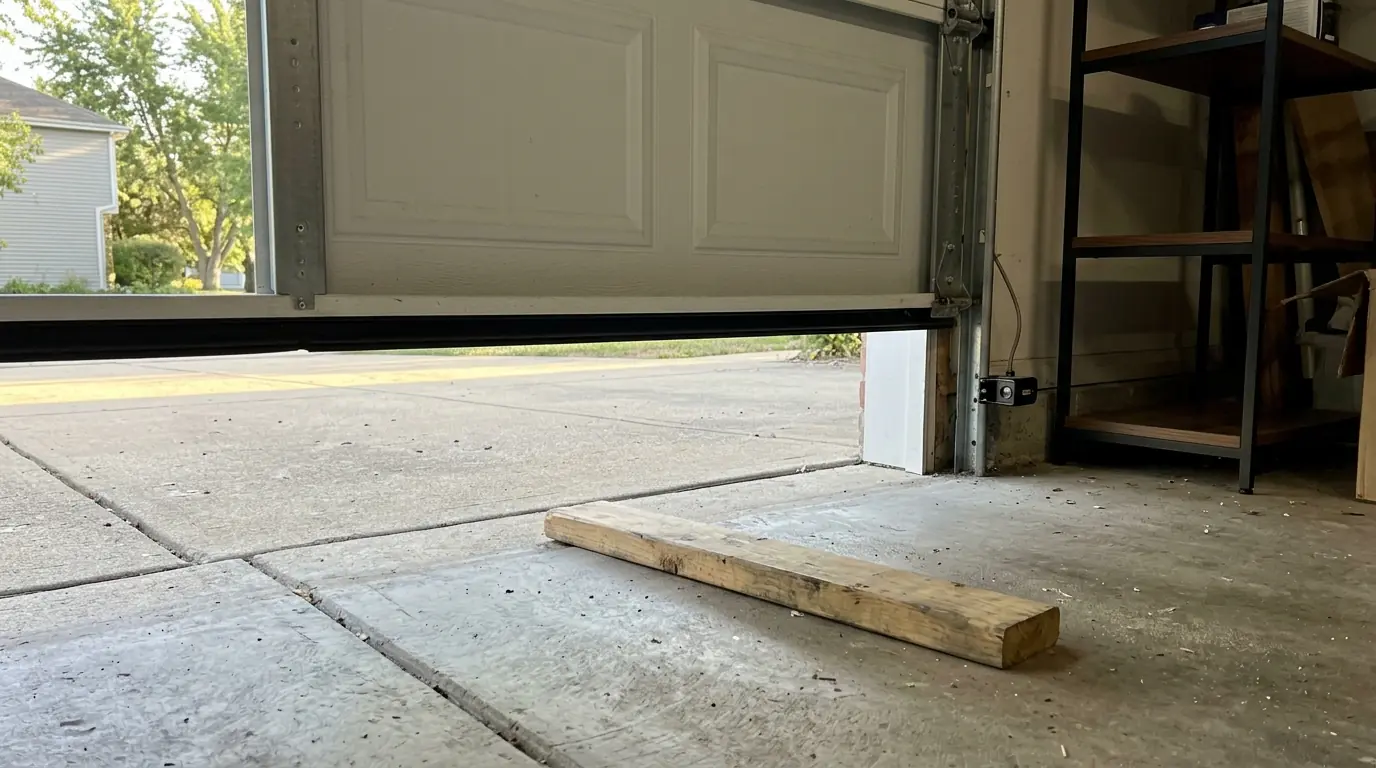
To test your garage door's safety reverse, lay a 2x4 flat on the floor in the door's path and close the door: it should reverse when it touches the board. Then close it again and break the photo-eye beam; it should reverse without touching anything. CPSC urges homeowners to test the reverse function and inspect the door and opener every 30 days.
Why this test matters
A closing garage door is heavy, and the reverse feature is what keeps it from pinning a child, a pet or a bike. Federal rules have required it for decades. Residential openers made on or after January 1, 1991 must reverse a closing door within two seconds after it contacts a two-inch-high test block on the floor, and openers made on or after January 1, 1993 must also carry additional entrapment protection, such as photo eyes or edge sensors.
Those features drift out of adjustment over time. A door gains weight, a photo eye gets knocked out of line, or the opener's force is turned up to push through a stiff winter. The test takes a few minutes and tells you whether the protection still works.
Test 1: the 2x4 contact test
- Clear people, pets and cars away from the door
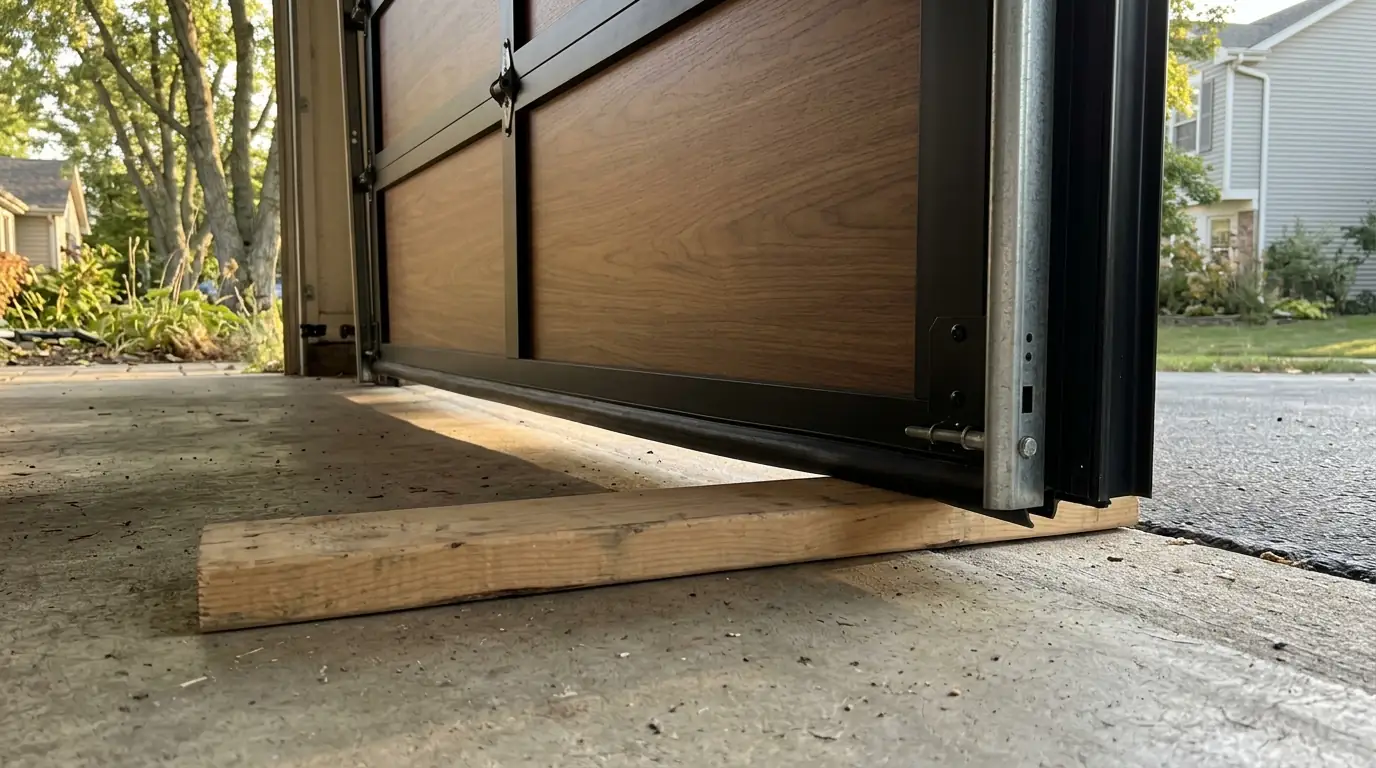
- Lay a 2x4 flat on the floor, in the middle of the opening, under the door
- Close the door with the wall button and watch the bottom edge
- The door should reverse within about two seconds of touching the board
- If it stops on the board and stays down, or crushes it, the test has failed
Test 2: the photo-eye beam
Start closing the door, then pass an object, a broom handle or a box, through the beam between the two photo eyes near the floor. Never use your hand, foot or body. The door should stop and reverse to the open position, and on many openers the light will blink.
If nothing happens, check that both sensor lights are steady and that the lenses are clean. If the eyes are aligned and the door still does not react, the sensors or their wiring need attention; see garage door sensor repair.
Test 3: the balance check
With the door fully closed, pull the emergency release to disconnect it from the opener. Lift the door by hand to about halfway and let go carefully. A balanced door stays roughly where you leave it. If it drops or climbs, the springs no longer match the door's weight, and the opener is working harder than it should.
Do not try to adjust springs yourself. Close the door, reconnect the opener, and have the springs checked; our spring guide explains what is involved.
If your door fails
- Stop using the opener to close the door until it is repaired
- Do not turn the force setting up to make it pass; that is the setting the test is checking
- Clean and realign the photo eyes if the beam test failed
- Call for service if the contact test or the balance check failed
If your opener predates 1993
Openers made before the 1993 rules may have no photo eyes at all, and some older units have no reliable reverse. The fix is a new opener, not an adjustment. A current opener installation brings photo eyes, rolling-code remotes and a soft-start motor, and it starts with a balance test of the door.
When to call instead
If the door fails the 2x4 test, it can close on whatever is under it. Stop using the opener to close it and call; we answer 24/7.
Related: Garage Door Sensor Repair, Garage Door Opener Repair, Garage Door Tune-Up.