Start here
When garage door jambs need repair
Short answer
Garage door jambs need repair when the bottom of the wood frame is soft, cracked or crumbling, the stop molding will not hold a nail, or the track brackets are pulling out of the framing. Rot usually starts within a foot of the driveway, where snowmelt and salt sit against the wood, and spreads upward behind the trim.
The job
Why the frame matters to the door
A garage door's tracks are bolted through brackets into the framing beside the opening, and torsion spring brackets are anchored above it. The jambs also carry the stop molding that seals the door. When that wood rots or splits, the seals leak, the tracks can shift, and in the worst case a bracket under spring tension can pull loose.
Repair means cutting out the rotted wood, fitting new material, sealing it from the slab, and covering it with a low-maintenance wrap. Then the stop molding and any loose brackets are refitted to solid wood.
Warning signs
Signs the frame around the door is failing
Soft wood at the bottom of the jamb
A screwdriver sinks in easily where rot has set in.
Stop molding pulling away
Nails have nothing solid left to hold.
Track brackets loose in the wall
Lag screws have lost their grip in rotted or split wood.
Peeling paint along the bottom of the frame
Often the first visible sign of water getting behind it.
Gaps where the jamb meets the slab
Water and pests get in where the wood has shrunk or rotted.
Cost
What moves the price of jamb and trim repair
Frame repairs depend on how far the rot runs. We probe the wood, show you the extent and price the repair before cutting anything out.
- How much of the jamb or header is rotted
- Whether track or spring brackets are involved
- PVC or aluminum wrap
- New stop molding
- Brick or siding detail around the opening
Rotted wood jambs
Rebuilding rotted wood jambs
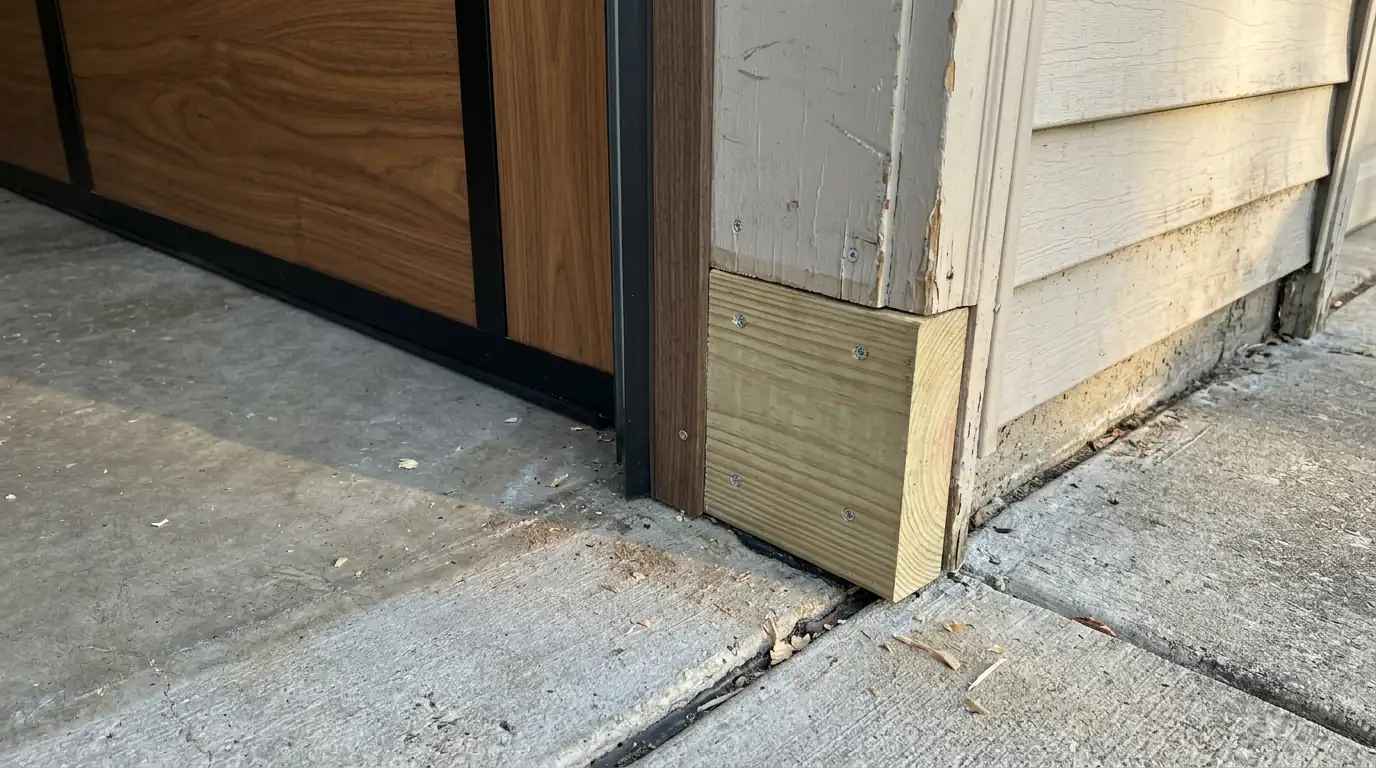
Rot almost always starts at the bottom, where the jamb meets the concrete. We cut back to sound wood, scarf in a new treated section or replace the full jamb, seal the end grain and keep the new wood off the slab so it does not wick water. On jambs that carry track brackets, the door is secured before anything is cut.
PVC trim wrap
Wrapping trim in PVC or aluminum
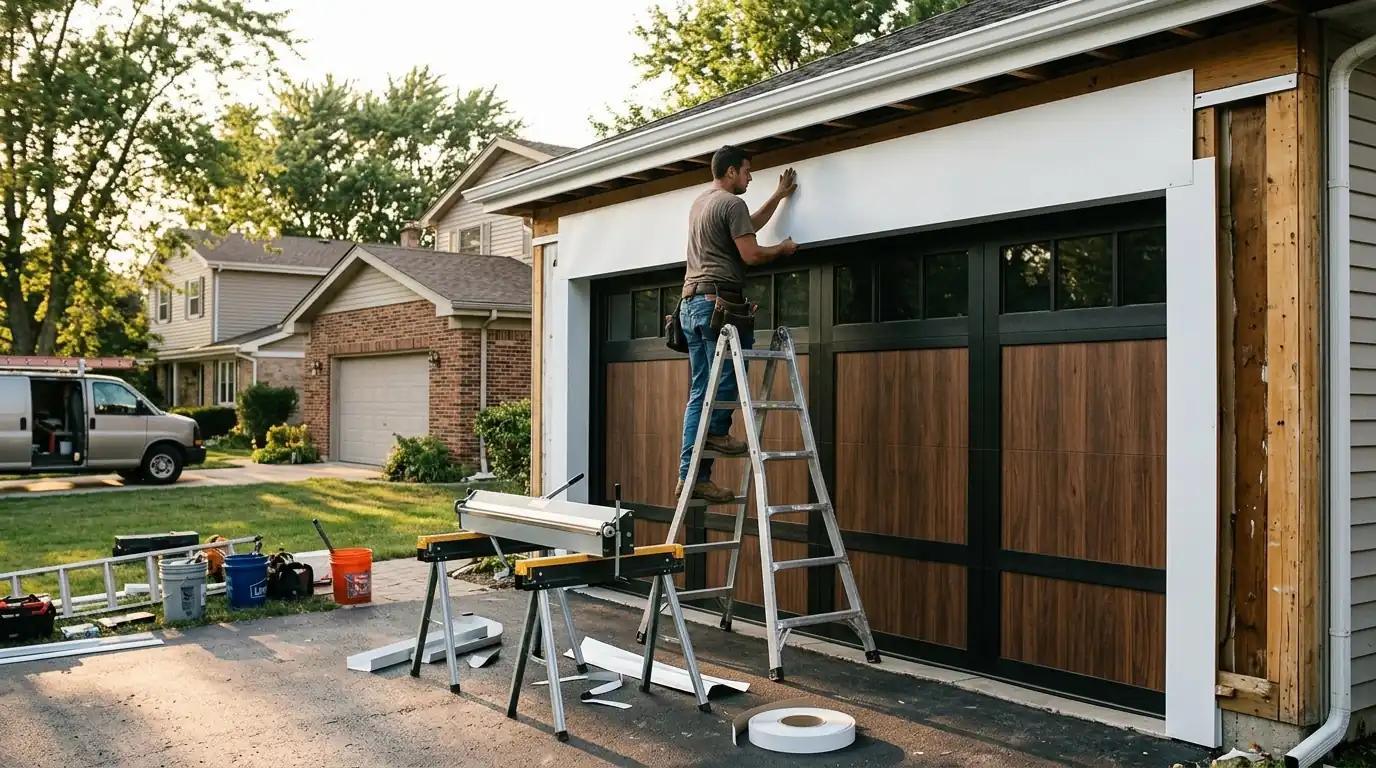
Once the jamb and header are sound, wrapping them in PVC trim or bent aluminum coil keeps water off the wood and ends the repainting cycle. The wrap is fitted tight to the brick or siding and caulked, and the stop molding goes back on over it so the door still seals.
Loose track brackets
Re-anchoring loose track brackets
A loose track bracket lets the track flex, which knocks the door out of line and wears the rollers. We re-anchor brackets into solid framing, add backing where the original wood has split, and re-plumb the track. A door that has been running on a loose track is checked for off-track damage at the same time.
Around Naperville
Older garage frames in Naperville
In Moser Highlands, built mostly in the late 1950s and early 1960s, and Wheatland View, built in the early to mid 1970s, the wood jambs around many garage doors have stood against the driveway for half a century or more. Frames that old have usually been painted many times, which can hide soft wood underneath, so we probe the bottom of each jamb before quoting rather than judging it by the paint.
Do it yourself or call
What owners can do, and what needs us
Painting and caulking are homeowner work. Anything holding the door's weight is not.
Fine to do yourself
- Keep snow and slush cleared away from the jambs
- Repaint bare wood before water gets in
- Caulk gaps between trim and siding
- Check the bottom of the jambs each spring with a screwdriver
Leave to a technician
- Cutting out rot near track or spring brackets
- Re-anchoring brackets under tension
- Replacing a jamb that carries the track
- Resetting stop molding so the door still seals
How the visit runs
How a jamb repair runs
- 1
Probe the frame
Find where the rot starts and stops.
- 2
Secure the door
Before cutting near any bracket.
- 3
Cut out and rebuild
Rotted wood replaced, ends sealed off the slab.
- 4
Wrap and seal
PVC or aluminum wrap, caulked to the wall.
- 5
Refit and test
Stop molding, brackets, tracks and a full test run.
Answers
Questions about garage door jamb & trim repair
Often the bottom section can be cut out and rebuilt. If the rot runs high or behind the track brackets, the full jamb is replaced.
Both keep water off the wood. PVC trim boards are thicker and crisp; aluminum coil follows odd shapes. We match what suits the house.
No. The frame is repaired separately; the door goes back on and seals once the jamb is solid.
The bottom sits against the slab, where snowmelt and rain collect and wood draws up water through its end grain.
Not into rotted wood. They need solid framing or new backing, or they will work loose again.
Same group
Related door work we handle
Garage Door Weatherstripping
Bottom seals and side stops replaced to block drafts, water and mice.
Garage Door Insulation Kits
Insulation added to a hollow steel door that is otherwise sound.
Retractable Garage Screen Doors
Screens that roll away when the car comes home.