Start here
Why the door reverses when the sensors are the problem
Short answer
Garage door sensors are a pair of photo eyes mounted about six inches above the floor, and if their beam is blocked or misaligned the opener will reverse the door and flash its light. Most sensor repairs are a realignment, a cleaned lens or a damaged wire, and the door closes normally once both sensor lights hold steady.
Warning signs
Signs the sensors need attention
The opener light blinks after a reverse
Many openers flash their light to say the photo eyes are blocked or out of line.
One sensor light is off or flickering
That sensor has lost the beam, or its wire is damaged.
The door closes only if you hold the wall button
Holding the button overrides the eyes on many openers; the sensors still need fixing.
It acts up only on sunny mornings
Low sun shining straight into a receiving eye can blind it.
Staples or wire chewed along the wall
Damaged low-voltage wire cuts the signal between the eyes and the opener.
The job
What the safety sensors actually do
The two small boxes near the bottom of the tracks send and receive an invisible beam across the opening. When something breaks the beam while the door is closing, the opener reverses. It is the reason a closing door stops for a child or a pet, and it has been required on residential openers for decades.
Because they sit low, the sensors get bumped by bikes, trash cans and shovels, and they collect dust, cobwebs and slush. Most failures are physical: a bracket knocked out of line, a dirty lens or a wire pulled loose. We fix those first and only replace a sensor that has actually failed.
Blinking opener light
When the opener light blinks and the door reverses
A blinking light after a reverse is the opener telling you the beam is broken. Check for anything in the opening, then look at the small light on each sensor: both should glow steadily. If one is off or flickering, the eyes are not seeing each other. We realign the brackets so the eyes face each other squarely and lock them so they stay put.
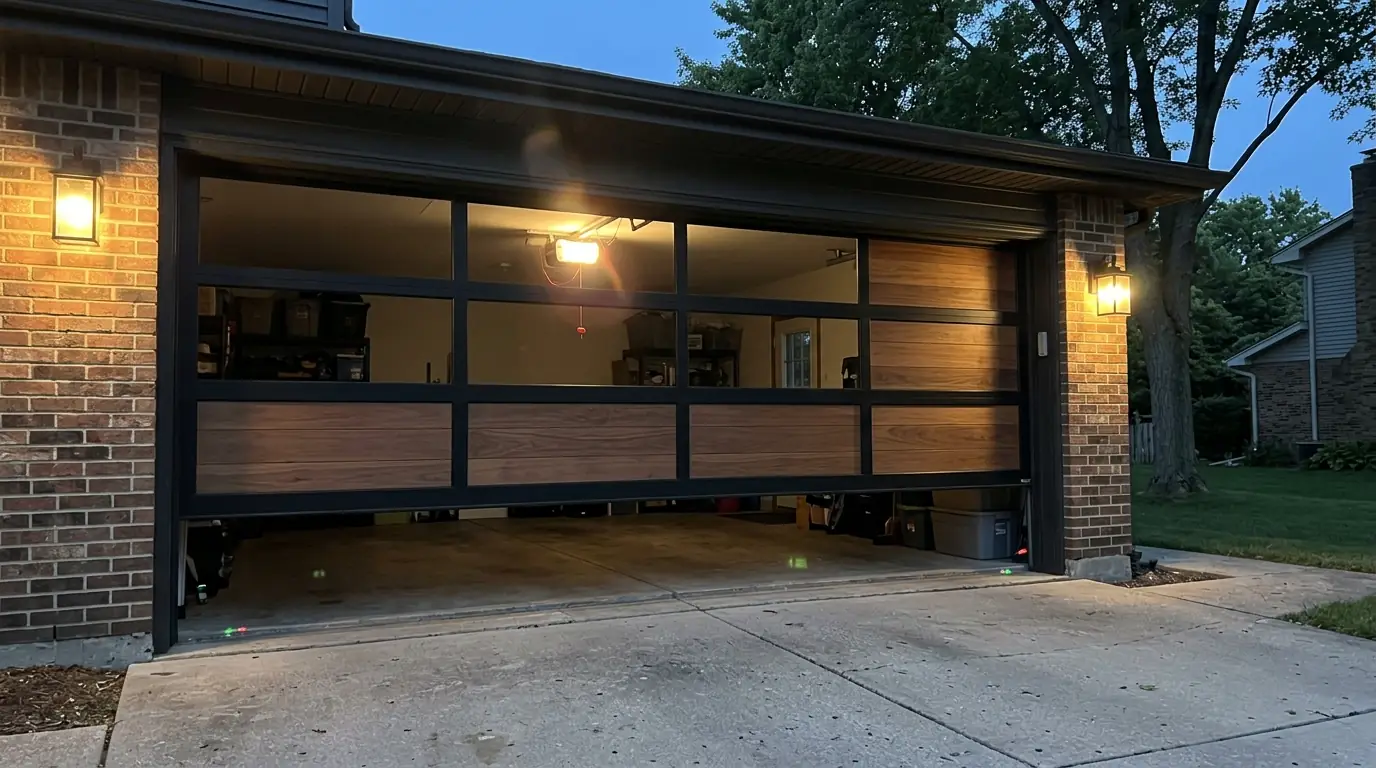
Misaligned photo eyes
Realigning misaligned photo eyes
Sensors are aimed by eye and held by a light bracket, so a nudge from a recycling bin is enough to throw them off. We clean both lenses, square the brackets to the track, align the beam, and then test it the way it matters: with something in the opening while the door is closing. If the brackets are bent or the track has shifted, they are replaced rather than bent back.
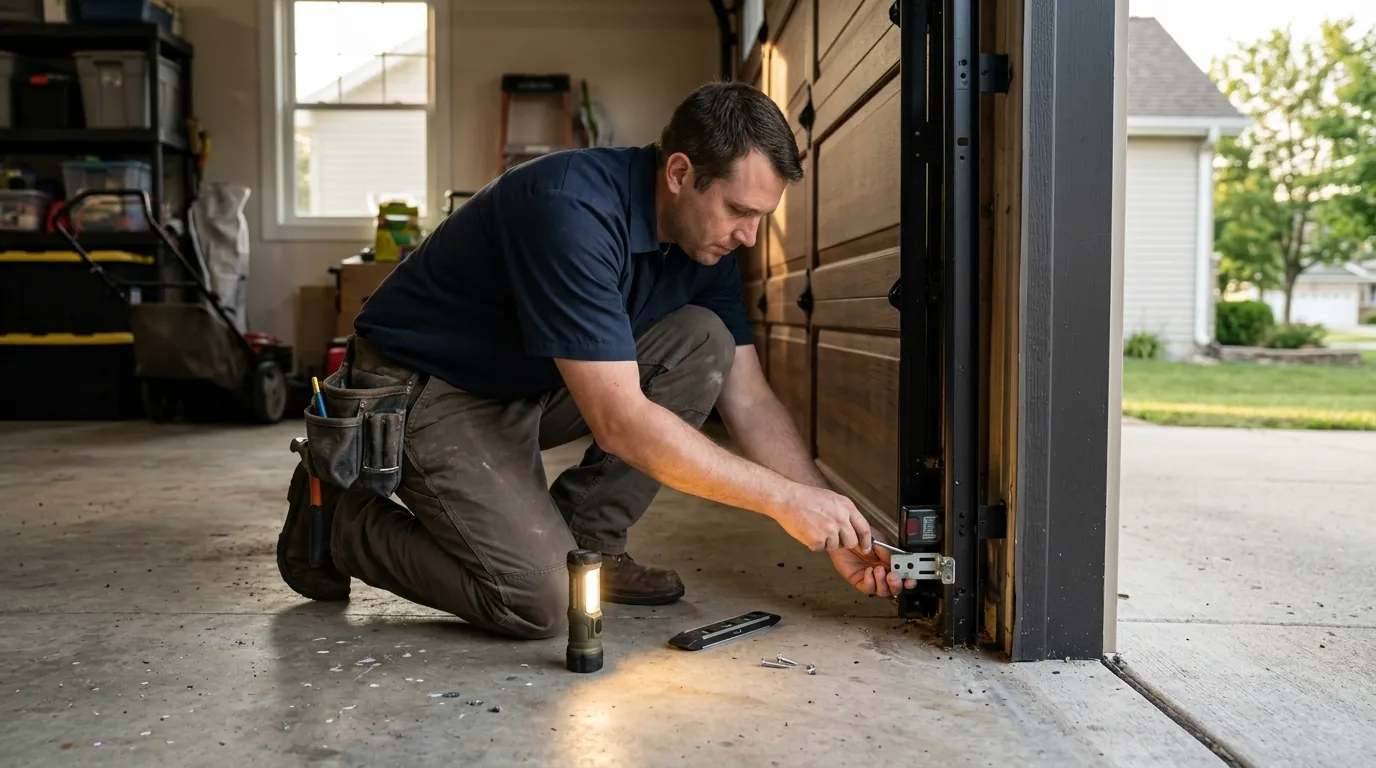
Damaged sensor wiring
Repairing damaged sensor wiring
The sensors run on thin low-voltage wire stapled along the wall and track. A staple driven through it, a chewed section or a loose terminal at the opener can all cut the signal. We trace the run, replace damaged sections, and use the right connectors at the opener so the problem does not come back with the next cold snap.
How the visit runs
How a sensor repair visit runs
- 1
Watch it fail
Run the door and read the sensor and opener lights.
- 2
Clean and align
Lenses cleaned, brackets squared to the track.
- 3
Trace the wiring
Run checked from each eye to the opener terminals.
- 4
Repair or replace
Damaged wire, brackets or a failed eye replaced.
- 5
Test the reverse
Something placed in the beam while the door closes.
Around Naperville
Snow, salt and sensors in Naperville
Naperville averages about 30 inches of snow a year, and much of it ends up shoveled or tracked against the bottom of the garage door, right where the photo eyes sit a few inches above the floor. A ridge of slush or a salt crust on a lens is enough to break the beam, so in winter a door that suddenly will not close is often a sensor that needs clearing rather than a part that has failed.
Do it yourself or call
What you can check first
Sensor problems are among the few garage door issues that are often safe to check yourself.
Fine to do yourself
- Clear anything from the opening and the sensor beam
- Wipe both lenses with a soft dry cloth
- Look at the sensor lights; both should be steady
- Check that both brackets point straight at each other
Leave to a technician
- Bypassing or disconnecting the sensors, which is unsafe
- Replacing damaged wiring at the opener terminals
- Replacing bent brackets or shifted tracks
- Diagnosing an opener board that ignores working sensors
Cost
What moves the price of a sensor repair
Most sensor visits are an alignment or a short wiring repair. We price what we find before any part is replaced.
- Alignment only, or new brackets
- Damaged wiring and how long the run is
- Sensor replacement and opener compatibility
- Whether the opener board is also at fault
- An overnight or holiday call
Answers
Questions about garage door sensor repair
No. The sensors are the safety system that stops a closing door from hitting a person or a pet. Bypassing them is unsafe; fixing the alignment or wiring is usually quick.
Low morning sun shining straight into the receiving eye can blind it. Swapping which side sends and receives, or shading the eye, usually solves it.
Most of the time just an alignment and a clean lens. We replace a sensor only when it has actually failed or the bracket is damaged.
Usually not. Sensors are matched to the opener's make and range, so replacements are chosen for your opener model.
It means the sensors are not working. Holding the button is a manual override; get the sensors fixed so the door reverses for obstacles again.
Same group
Related door work we handle
Garage Door Opener Repair
Openers that hum, click or run without moving the door, repaired or retired.
Garage Door Opener Installation
New belt or chain drive openers hung, wired, aligned and force-tested.
Jackshaft Opener Installation
Wall-mount openers that free the ceiling for storage or a lift.
Smart Garage Door Opener Installation
Phone control and open-door alerts added to new or existing openers.