Start here
When garage door seals need replacing
Short answer
Garage door weatherstripping needs replacing when you can see daylight under or around the closed door, the bottom seal is flattened, cracked or torn, or water runs in under the door; national cost guides put weatherstripping at about $170 to $490. The bottom seal wears fastest because it carries the door's weight every time it closes.
The job
The three seals on a garage door
A garage door seals in three places. The bottom seal is a rubber or vinyl strip in a retainer along the bottom edge that presses into the floor. The stop molding runs along both sides and the top of the frame, with a soft flap that presses against the face of the door. A threshold seal, when there is one, is a raised strip on the floor itself.
Each wears differently. The bottom seal flattens and tears from being closed on, frozen to the floor and dragged over salt. Stop molding dries out and cracks in the sun, or pulls away as the wood jamb behind it ages. Fixing the right one is the difference between a door that seals and one that still whistles.
What is included
What a seal replacement covers
- Checking the door's gaps closed, with the lights off
- Matching the bottom seal profile to the retainer
- Replacing bent or corroded retainers
- Resetting stop molding so it seals without dragging
- Checking the door's travel limit so it closes fully
- Adding a threshold seal where the floor is uneven
Bottom seal replacement
Bottom seal replacement
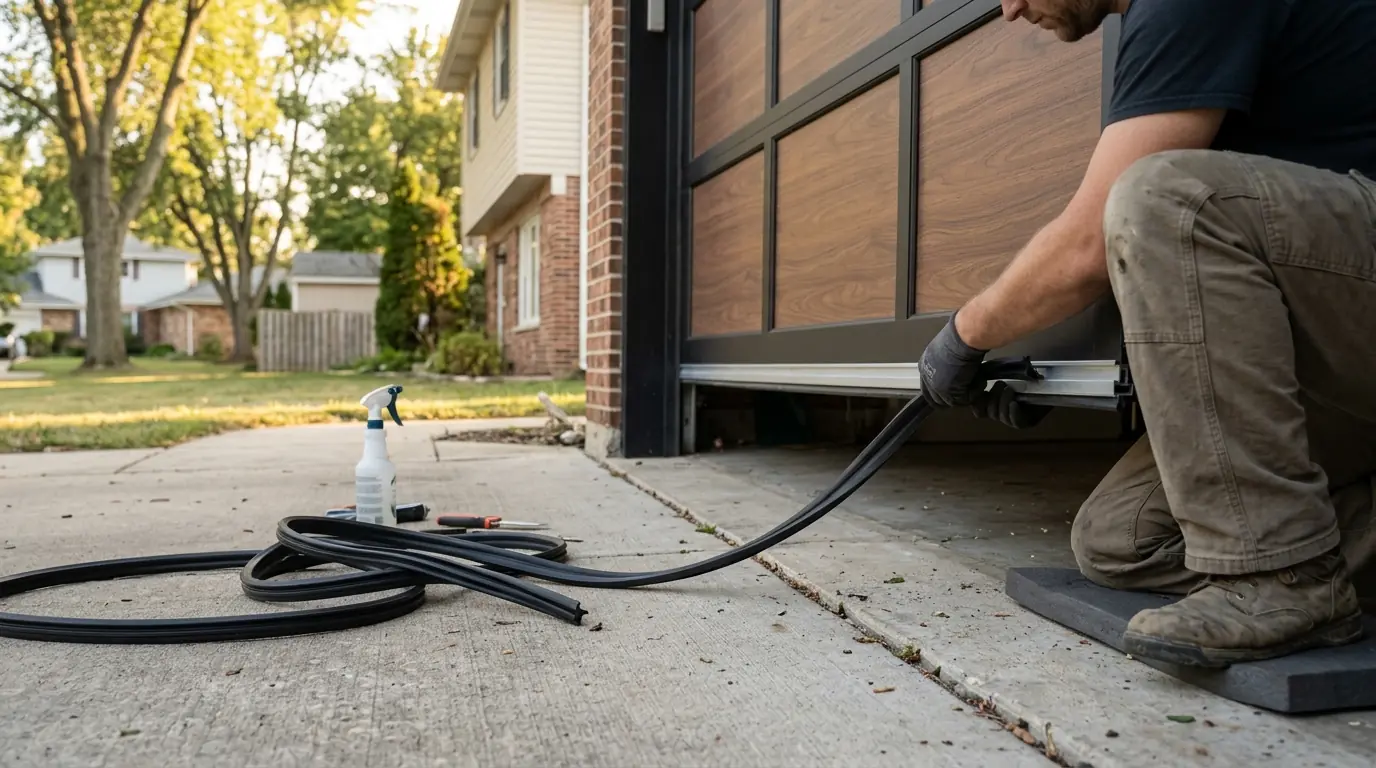
The bottom seal slides into an aluminum or vinyl retainer on the last section. We match the profile to the retainer, which varies by door maker, slide in the new seal and trim it to length. If the retainer itself is bent or corroded, it is replaced too, because a new seal in a bent retainer still leaves gaps. An uneven floor gets a taller bulb seal.
Perimeter stop molding
Perimeter stop molding
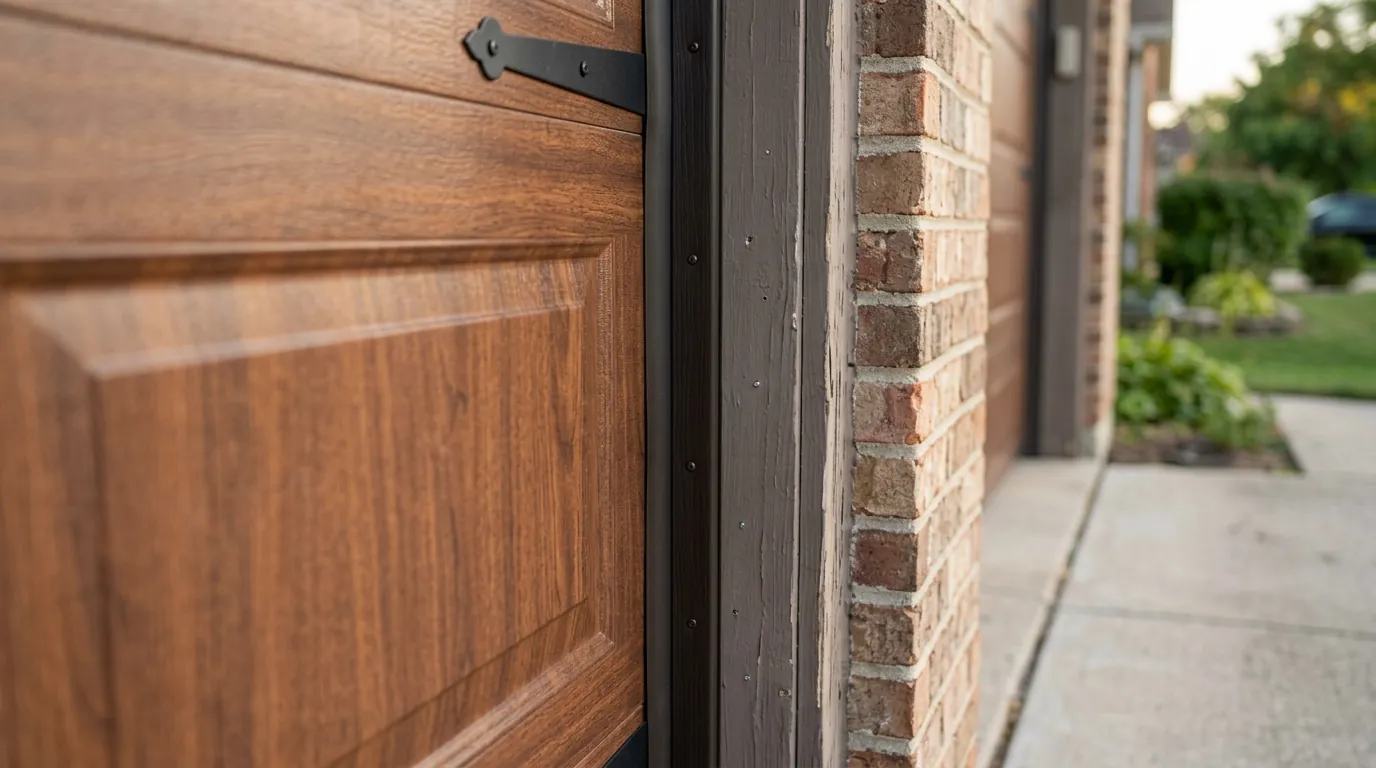
Stop molding is nailed or screwed to the jambs and header with its flexible edge pressed against the closed door. Too loose and air comes in; too tight and the door drags. We replace cracked molding and set it so the flap just touches the door. On rotted jambs the molding needs something solid to hold, which is a jamb and trim repair.
Threshold seal
Threshold seals on uneven floors
When the garage floor has settled or slopes, a bottom seal alone cannot close the gap. A threshold seal is a raised rubber strip bonded to the floor that the door closes onto. It also stops water running in from the driveway. It needs a clean, dry floor to bond to, so in winter we sometimes fit the bottom seal first and add the threshold when conditions allow.
Around Naperville
Seals against Naperville winters
Naperville averages about 30 inches of snow a year, and the deep cold snaps, like January 2014 when lows averaged about 6F, are when a bottom seal freezes to the slab and tears the next time the door opens. Snowmelt then runs straight under the gap. Keeping the seal supple with a silicone spray and replacing it before it splits saves both the seal and the floor of the garage.
Do it yourself or call
Seal jobs you can do, and ones to leave
Some seal work is homeowner-friendly. Anything near the door's tension hardware is not.
Fine to do yourself
- Check for daylight with the door closed and the lights off
- Clear ice and salt crust from the bottom seal in winter
- Wash the seal and spray silicone so it does not freeze to the floor
- Replace a bottom seal in a sound retainer
Leave to a technician
- Retainers on doors with tension near the bottom brackets
- Stop molding on rotted or loose jambs
- Adjusting the opener so the door closes fully
- Threshold seals on cracked or heaved floors
How the visit runs
How a seal replacement runs
- 1
Check the gaps
Door closed, lights off, daylight and drafts marked.
- 2
Identify the profile
Retainer type and door maker decide the seal.
- 3
Replace the bottom seal
Old seal out, new seal in, retainer fixed if bent.
- 4
Reset the perimeter
Stop molding replaced and set to touch, not drag.
- 5
Check the close
Travel limit set so the door seals against the floor.
Cost
What garage door weatherstripping costs
National cost guides put garage door weatherstripping at about this range. It is a planning figure, not our quote.
- Bottom seal only, or the full perimeter
- Retainer condition and replacement
- Door width
- Threshold seal on an uneven floor
- Jamb repairs behind the molding
Compare the options
Bottom seal types and where they fit
Bottom seals are not universal. The retainer on your door decides the shape.
| Fits | Best for | |
|---|---|---|
| T-style seal | Retainers with a T-shaped channel | Most modern steel doors |
| Bulb seal | Retainers with round channels | Floors with small dips |
| J-style seal | Retainers with J-shaped channels | Some older steel doors |
| Nail-on seal | Wood doors without a retainer | Older wood doors |
Answers
Questions about garage door weatherstripping
Close the door, turn off the lights and look for daylight along the floor and sides. Flattened, cracked or torn rubber is due for replacement.
It freezes to the floor and tears when the door opens. Clearing ice and spraying silicone on the seal helps, and a softer cold-weather seal holds up better.
Often, yes. If the floor slopes toward the garage, a threshold seal may be needed as well.
No. The retainer shape decides the seal. We match the profile to your door's retainer.
A tight bottom seal and side seals close the gaps mice use. Chewed seals should be replaced promptly.
Same group
Related door work we handle
Garage Door Insulation Kits
Insulation added to a hollow steel door that is otherwise sound.
Garage Door Jamb & Trim Repair
Rotted jambs and loose brackets rebuilt so the door has something solid to hang on.
Retractable Garage Screen Doors
Screens that roll away when the car comes home.