Start here
What garage door repair usually comes down to
Short answer
Most garage door repairs trace back to one of five parts: springs, cables, rollers, tracks or the opener, and national cost guides put a typical repair at about $152 to $363. We test the door by hand with the opener disconnected first, so we know whether the door itself is balanced before anyone blames the motor.
Warning signs
What your door is telling you
It reverses before reaching the floor
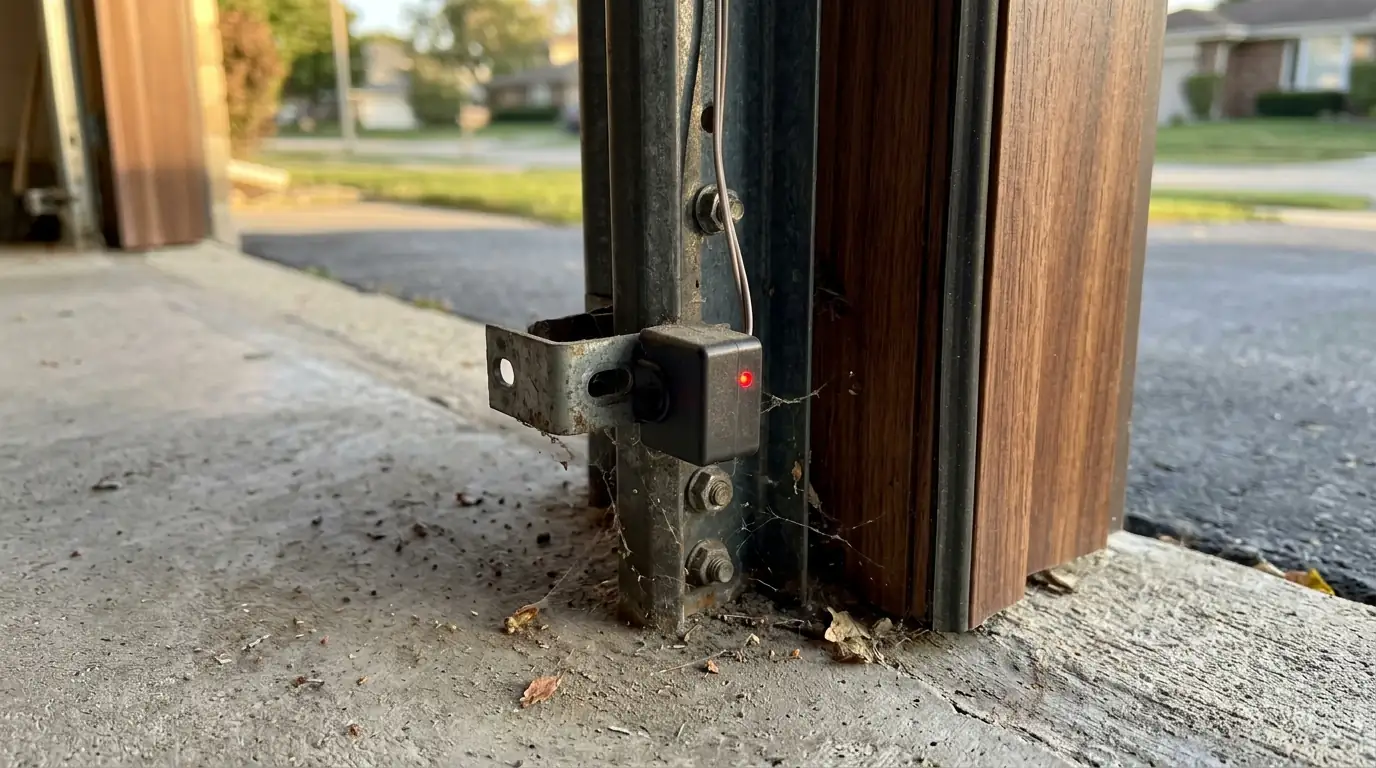
The photo eyes see something, or the opener's force setting is fighting a heavy door.
It stops a few inches up
Often a spring that has lost tension, or travel limits that have drifted.
It shakes or jerks as it moves
Worn rollers, a bent track or loose hinges along the sections.
The bottom edge is uneven on the floor
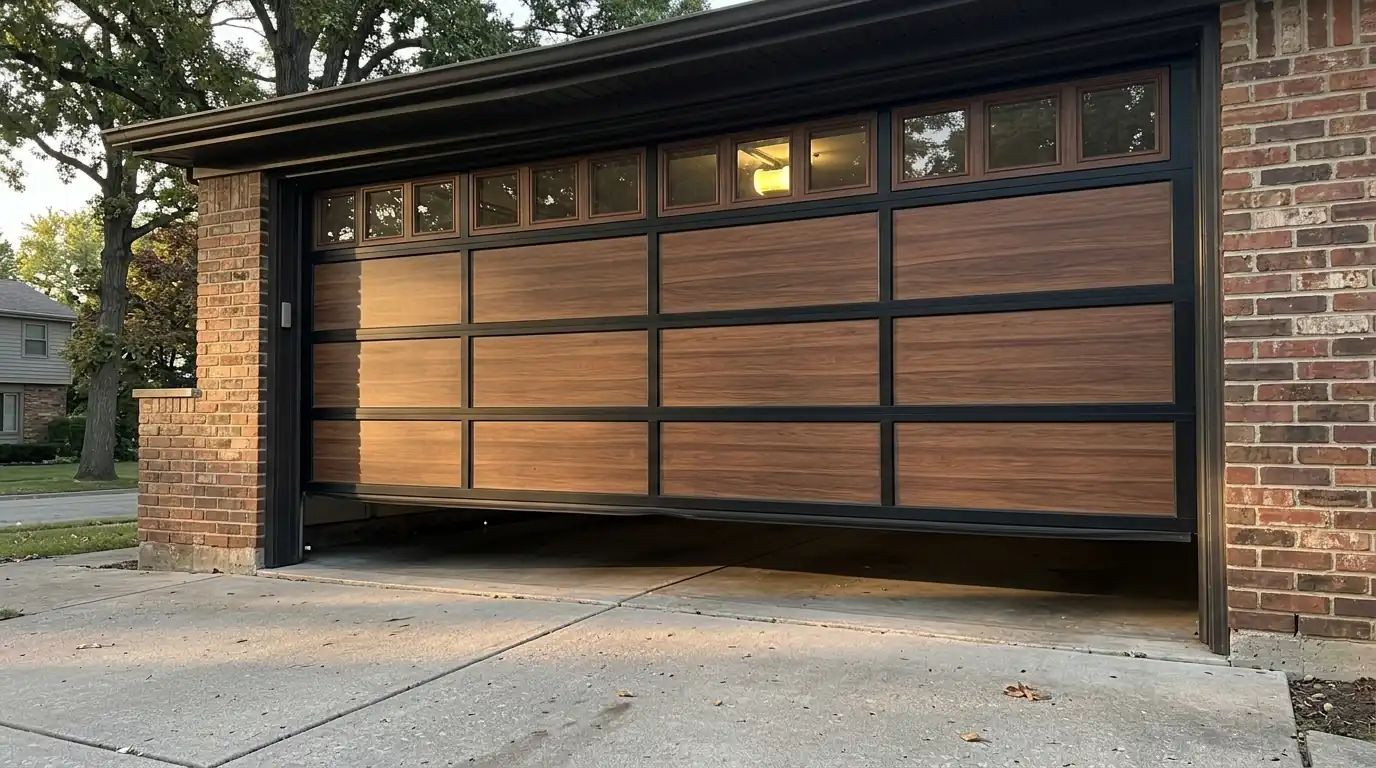
A cable has stretched or slipped on one drum.
A section bows in the middle
A cracked hinge or a missing strut on a wide door.
The job
How we find the real cause
A garage door is a system. The springs carry the weight, the cables and drums transfer it, the rollers ride in the tracks, and the opener steers the whole thing. A symptom in one place often starts in another, which is why the same complaint, a door that reverses, can be a photo eye, a heavy door or a worn opener.
So we start with the opener disconnected and lift the door by hand. A balanced door stays put halfway up; if it drops or climbs, the springs are the story. If it balances, we move to the cables, rollers, tracks and the opener's settings.
Door reverses before it closes
When the door reverses before it closes
A door that comes down and goes back up is doing what it was designed to do when it thinks something is in the way. The photo eyes by the floor are the first check: a misaligned or dirty lens, sun glare or a loose wire is enough. If the eyes are fine, the opener's close force may be set too low for a door that has grown heavy, which points back to the springs. Raising the force to make it close is the wrong fix. Photo eye problems get their own page.
Door lifts a few inches and stops
When the door lifts a few inches and stops
An opener that starts, strains and quits is usually feeling more weight than it should. That can be a spring that has lost tension with age, a cable that has slipped on its drum, or a travel limit that has drifted out of setting. We check the balance by hand before touching the opener, because resetting the limits on a door that is out of balance just moves the problem to the gear. If a spring is the cause, replacing the torsion springs fixes it.
Grinding or popping on every run
When it grinds or pops on every run
Grinding usually means rollers with worn bearings or a track that has been knocked out of line. Popping and banging often come from a hinge cracking between sections or a roller jumping in a bent track. These start small and get worse, and a roller that leaves the track can take the door with it. Worn parts are cheap to replace before they fail and expensive after.
How the visit runs
How a repair visit runs
- 1
Hear what it is doing
On the phone and again at the door: the noise, the stop, the reverse.
- 2
Test by hand
Opener disconnected, door lifted and stopped halfway to check balance.
- 3
Inspect the rest
Cables, drums, rollers, hinges, tracks and the opener's settings.
- 4
Price, then repair
You get the price for what we found before parts go on.
- 5
Test with you
Full runs, photo eyes and the safety reverse before we leave.
Around Naperville
Repair calls near our Village Green Rd office
Our office sits in Village Green, a Naperville subdivision built between 1978 and 1987, and about a quarter of the city's homes date from that same decade. Doors from that era can still be on their original tracks, hinges and rollers, so on a repair call there we look at those parts while the door is open rather than fixing only the one that failed. It is cheaper to replace a cracked hinge during a visit than to come back for it.
Do it yourself or call
What you can check before you call
A few checks are safe and often solve the problem. Anything under spring tension is not.
Fine to do yourself
- Wipe the photo eye lenses and make sure both indicator lights are steady
- Clear anything from the door's path and the tracks
- Lubricate steel rollers and hinges with garage door lubricant
- Replace the batteries in remotes and the wall keypad
Leave to a technician
- Bottom brackets, which hold cable tension
- Springs and cables of any kind
- Straightening a bent track under load
- Opener force and travel adjustments on an unbalanced door
Cost
What a garage door repair costs
National cost guides put a typical garage door repair at about this range. It is a planning figure, not our quote; you hear our price before work starts.
- Which part failed: spring, cable, roller, track or opener
- How many related parts are worn
- Door size and weight
- Whether replacement parts are still made for your door
- An overnight or holiday call
Answers
Questions about garage door repair
The opener thinks something is in the way. Usually it is the photo eyes, sometimes the close force on a door that has become heavy. We check the eyes first and the door's balance second.
Disconnect the opener and lift the door by hand. If it is heavy or will not stay halfway up, the door needs work; if it balances, suspect the opener.
For a short time, but grinding is wear, and worn rollers or a bent track can let the door come off its track. Get it looked at before it fails.
National guides put a typical repair at about $152 to $363. Your price depends on the part and the door, and we give it to you before any work starts.
Same group
Related door work we handle
Emergency Garage Door Repair
A door stuck open at night or a car trapped inside, answered around the clock.
Garage Door Off-Track Repair
Rollers out of the track and doors hanging crooked, reset and squared.
Garage Door Panel Replacement
One damaged section swapped instead of the whole door, when the part still exists.
Garage Door Cable Replacement
Frayed, slack or snapped lift cables replaced in pairs and wound back on the drums.