Start here
Is a wood garage door worth it in Naperville?
Short answer
A real wood garage door is worth it when the house calls for it and you are prepared to refinish it every few years; HomeGuide puts installed wood doors at about $1,200 to $4,000. In a climate with 30 inches of snow and salted driveways, wood-look composite and steel doors give a similar look with far less upkeep.
The job
What you are choosing with a wood door
Wood doors are built in sections from real lumber, usually cedar, hemlock or another species chosen for stability and how it takes stain. They are heavier than steel doors, which means larger springs and a sturdier opener, and they move with the seasons as the wood takes on and loses moisture.
The alternative is a composite overlay: a wood-look skin over an insulated steel or composite core. From the curb many people cannot tell the difference. Up close, real wood has grain depth and variation that a molded skin does not, and the choice usually comes down to how much maintenance you want to own.
Cost
What a wood garage door costs
HomeGuide puts installed wood doors at about this range. Custom sizes and species run higher. It is a planning figure, not our quote.
- Species and construction
- Door size and whether it is custom
- Windows and decorative hardware
- Factory finish or on-site staining
- Larger springs or a new opener for the weight
Compare the options
Real wood, composite or steel
Three ways to put a warm-looking door on the house.
| Real wood | Wood-look composite | Steel with woodgrain | |
|---|---|---|---|
| Look up close | Real grain and variation | Molded grain, consistent | Embossed or printed grain |
| Upkeep | Refinish every few years | Wash, little else | Wash, touch up scratches |
| Weight | Heaviest | Moderate | Lightest |
| Salt and snowmelt | Bottom section needs watching | Resists moisture | Watch for rust at scratches |
Cedar and hemlock doors
Cedar and hemlock doors
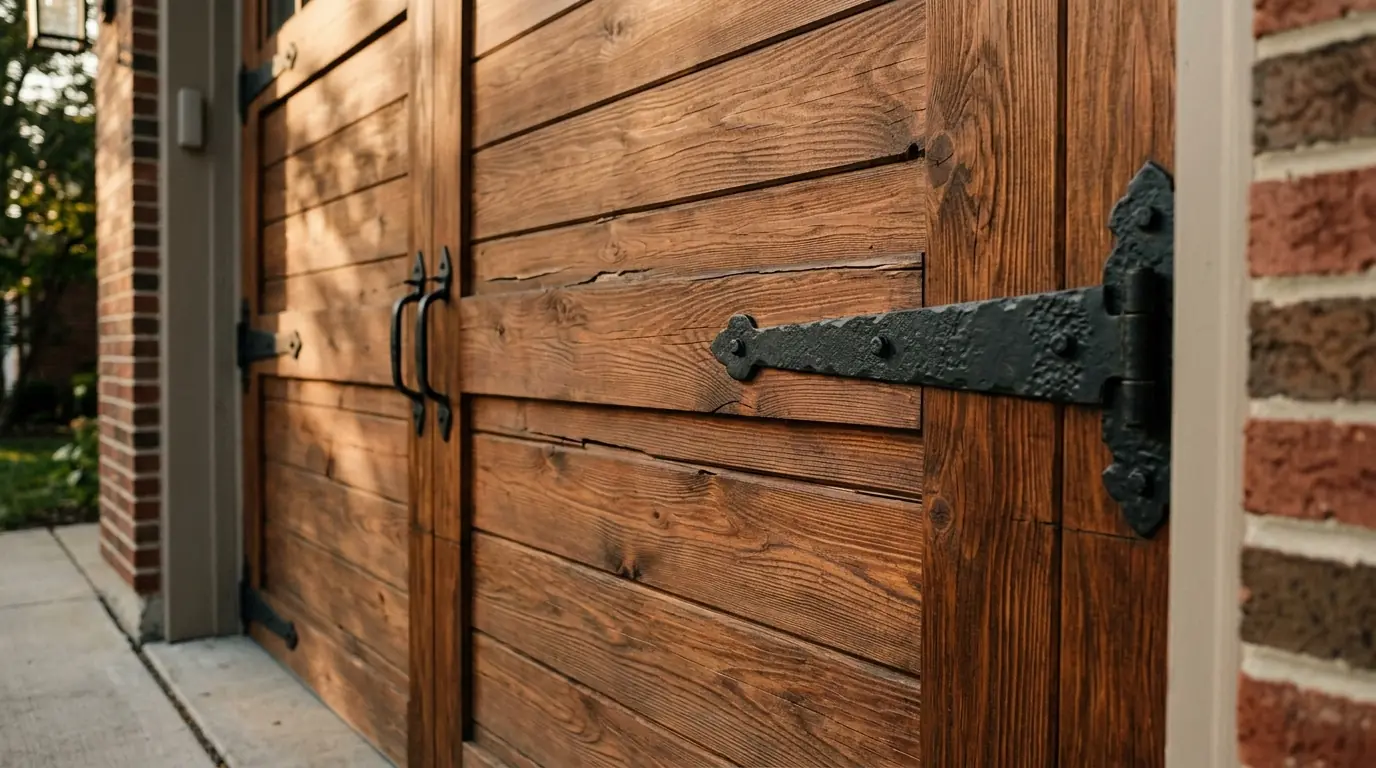
Cedar is naturally rot-resistant and light for its strength, and it takes stain well, which is why it is common on carriage and modern plank doors. Hemlock is stable and often painted or stained darker. Either way, the door arrives sealed or is finished on site, and the springs are sized to its real weight, which is more than most people expect.
Wood-look composite doors
Wood-look composite doors
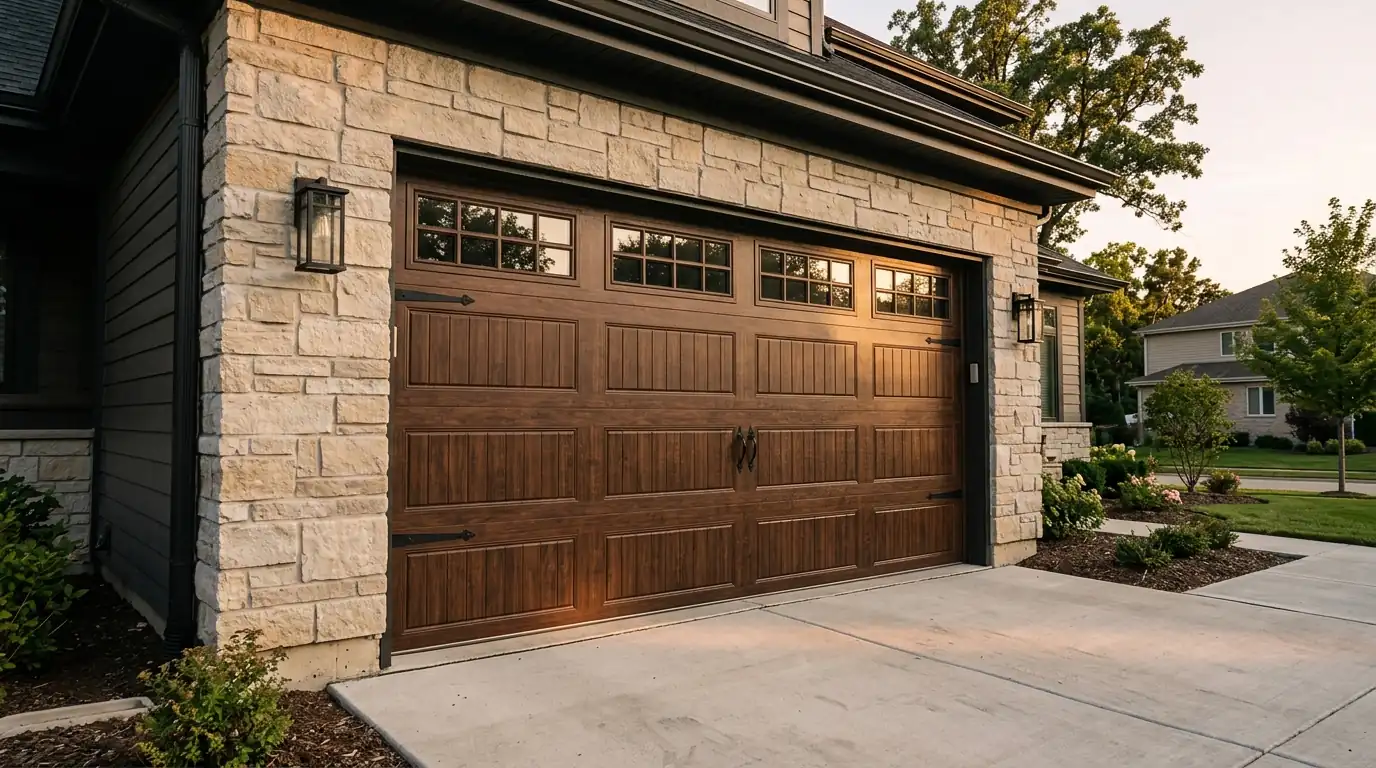
Composite doors use a molded skin with a wood grain pattern over an insulated core. They will not rot, crack or need refinishing, and the insulated core makes them warmer than most real wood doors. The trade-off is that the grain repeats and the color is set at the factory. For many Naperville homes, this is the practical way to get the look. Insulation is covered in detail on our insulated garage doors page.
Keeping wood sealed
Keeping a wood door sealed
The finish is what protects the wood, so the schedule matters: wash the door, check the finish every year, and refinish when the sheen goes flat or water stops beading, with the sunniest and lowest sections first. The bottom section takes the most abuse from snowmelt and salt, so it is the one to watch.
Around Naperville
Wood doors on Naperville streets
More than 300 Naperville homes were torn down and rebuilt between 2008 and 2017, and a custom rebuild is often the moment a homeowner considers a real wood door. Winter is the test. About 30 inches of snow a year in Naperville turns into salted slush that sits against the bottom section, so on any wood door we install here, the bottom edge seal and the finish on the lowest section get the most attention.
Do it yourself or call
What owners can do, and what we handle
Most wood door upkeep is homeowner work. The weight of the door is not.
Fine to do yourself
- Wash the door with mild soap twice a year
- Check the finish each spring for flat or peeling spots
- Keep snow and salt off the bottom section
- Refinish small areas before bare wood shows
Leave to a technician
- Removing sections for a full refinish
- Resizing springs after a door gains weight
- Replacing a rotted bottom section
- Installing the door, tracks and opener
How the visit runs
How a wood door install runs
- 1
Measure and choose
Opening size, headroom, species, style and finish.
- 2
Order the door
Built to size; the springs are sized to its weight.
- 3
Remove the old door
Old door, springs and tracks out, opening checked.
- 4
Install and balance
Sections, tracks, springs, cables and opener reset.
- 5
Walk through the upkeep
Finish schedule and what to watch each spring.
We install and service doors from Clopay, Amarr, Wayne Dalton, C.H.I. and Raynor, among other makers.
- LiftMaster
- Chamberlain
- Genie
- Clopay
- Amarr
- Wayne Dalton
- C.H.I.
- Raynor
- Haas Door
- Overhead Door
- Windsor Door
- Marantec
Answers
Questions about wood garage doors
It depends on sun and exposure. Check the finish every year and refinish when water stops beading or the sheen goes flat, starting with the sunniest sections.
Wood has some natural insulating value, and some wood doors add an insulated core. Composite doors with foam cores are usually warmer.
Wood doors are heavier, so the springs are sized up. A healthy opener can handle a balanced wood door; the springs do the lifting.
Often, yes, if the door's maker still supplies sections. Otherwise a section can sometimes be built to match.
For most owners, yes. Composite and woodgrain steel doors give a similar look from the curb with very little upkeep.
Same group
Related door work we handle
Garage Door Replacement
Old doors out and new ones in, with springs sized and the opener reset.
Insulated Garage Doors
Insulated steel doors for attached garages that sit through Illinois winters.
Carriage House Garage Doors
The swing-door look on a door that still rolls up overhead.
Steel Garage Doors
Raised, long and flush panel steel doors in the gauges that hold up.