Short answer
Most garage door noises point to a specific part: squealing usually means dry or worn rollers, hinges or bearings; grinding points to worn rollers or an opener gear; popping can be a cracked hinge; rattling is loose hardware; and a loud bang from a closed door usually means a broken spring. A single loud bang should be checked right away.
Noises at a glance
| Noise | Usual cause | What to do |
|---|---|---|
| Squeal or squeak | Dry rollers, hinges or bearings | Lubricate; replace worn rollers |
| Grinding | Worn rollers, bent track or opener gear | Check rollers and track; call if the opener grinds |
| Popping mid-travel | Cracked hinge or flexing section | Have hinges checked |
| Rattling | Loose hinges, brackets or opener chain | Tighten hardware; check the chain |
| One loud bang | Broken spring | Stop, leave the door closed, call |
Squealing and squeaking
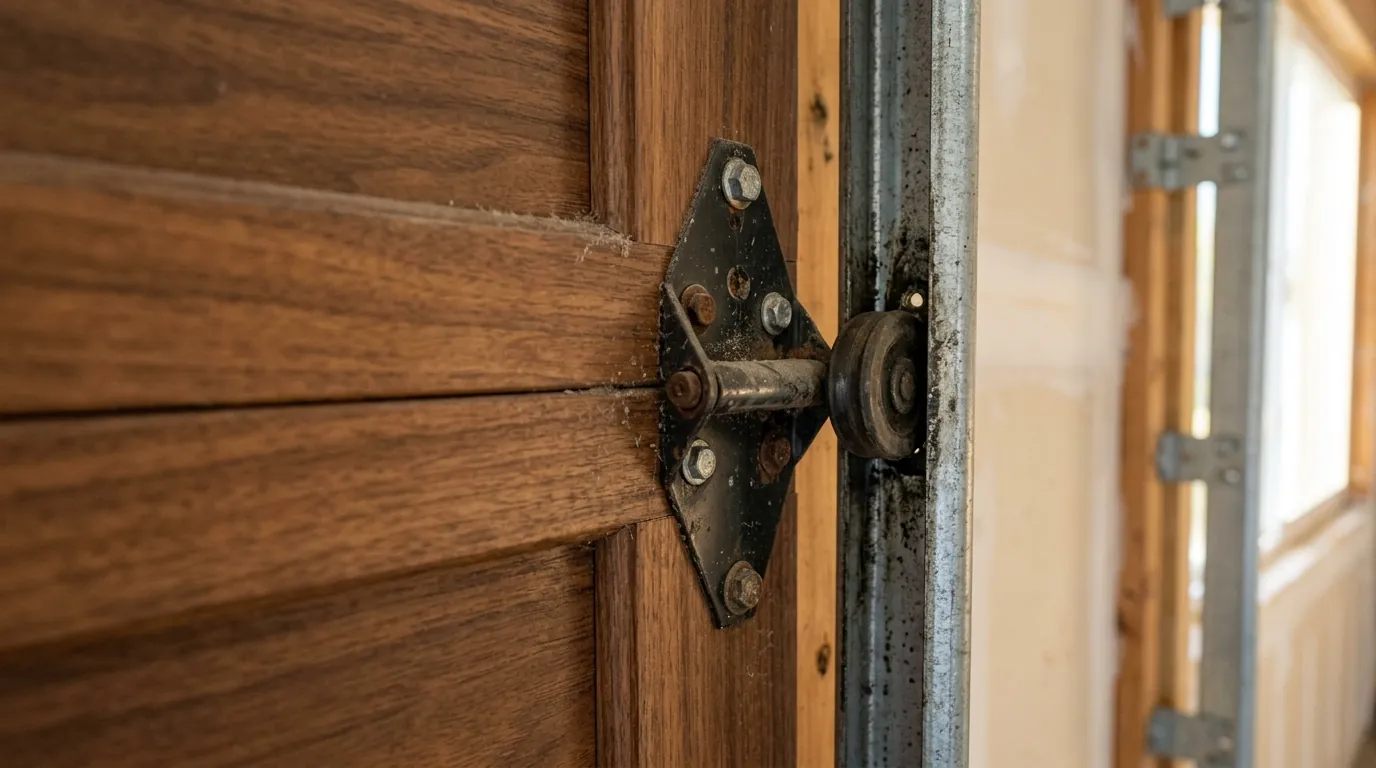
The most common noise, and the easiest to fix. Steel rollers with exposed bearings, hinges and the spring itself all squeal when they dry out. A garage door lubricant on the rollers, hinges, bearings and springs twice a year usually quiets them. Do not grease the tracks; grease in the track collects grit.
If the squeal returns within days, the rollers are worn rather than dry, and sealed nylon rollers are the lasting fix.
Grinding
Grinding from the door usually means rollers with flat spots or worn bearings, or a track that is bent or out of line so the rollers scrape. Grinding from the opener itself, especially with the door moving slowly or not at all, often means a stripped drive gear. Keep using a grinding opener and the gear finishes failing; opener repair covers the fix.
Popping, snapping and creaking
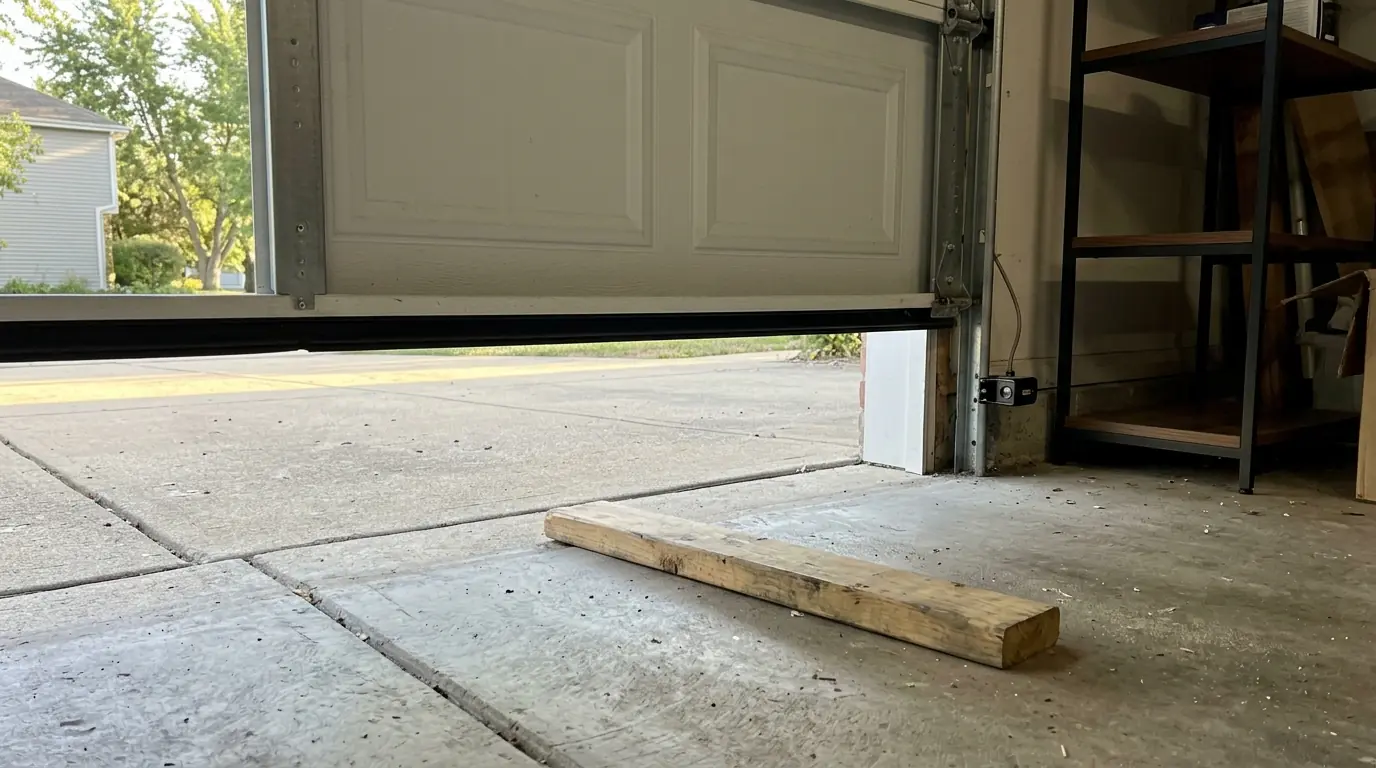
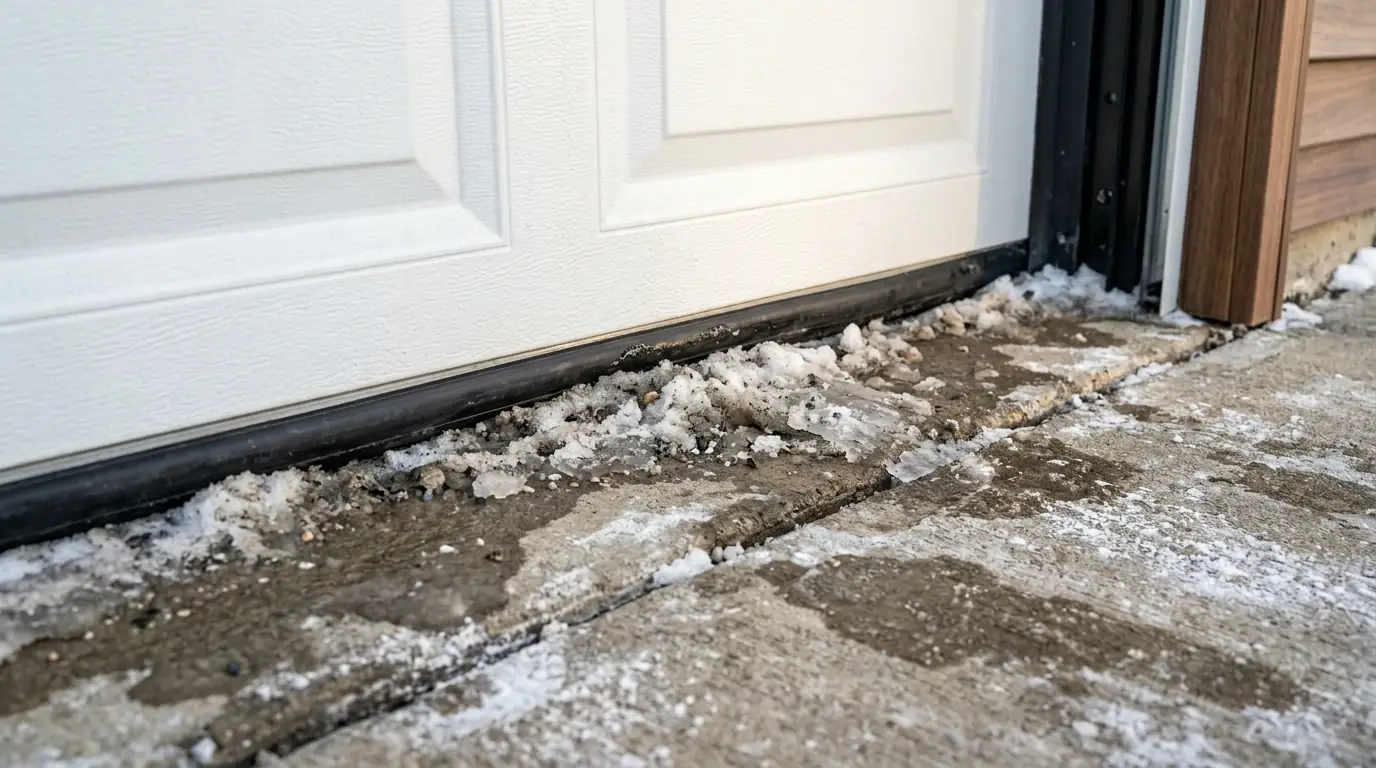
A pop as the door turns from the vertical track into the horizontal one often comes from a cracked center hinge letting two sections flex. A creak as the door moves can be a dry spring or a loose bracket. A sharp snap on a cold morning can be a frozen seal letting go of the floor, which is harmless once, but worth freeing gently next time.
Rattling and vibration
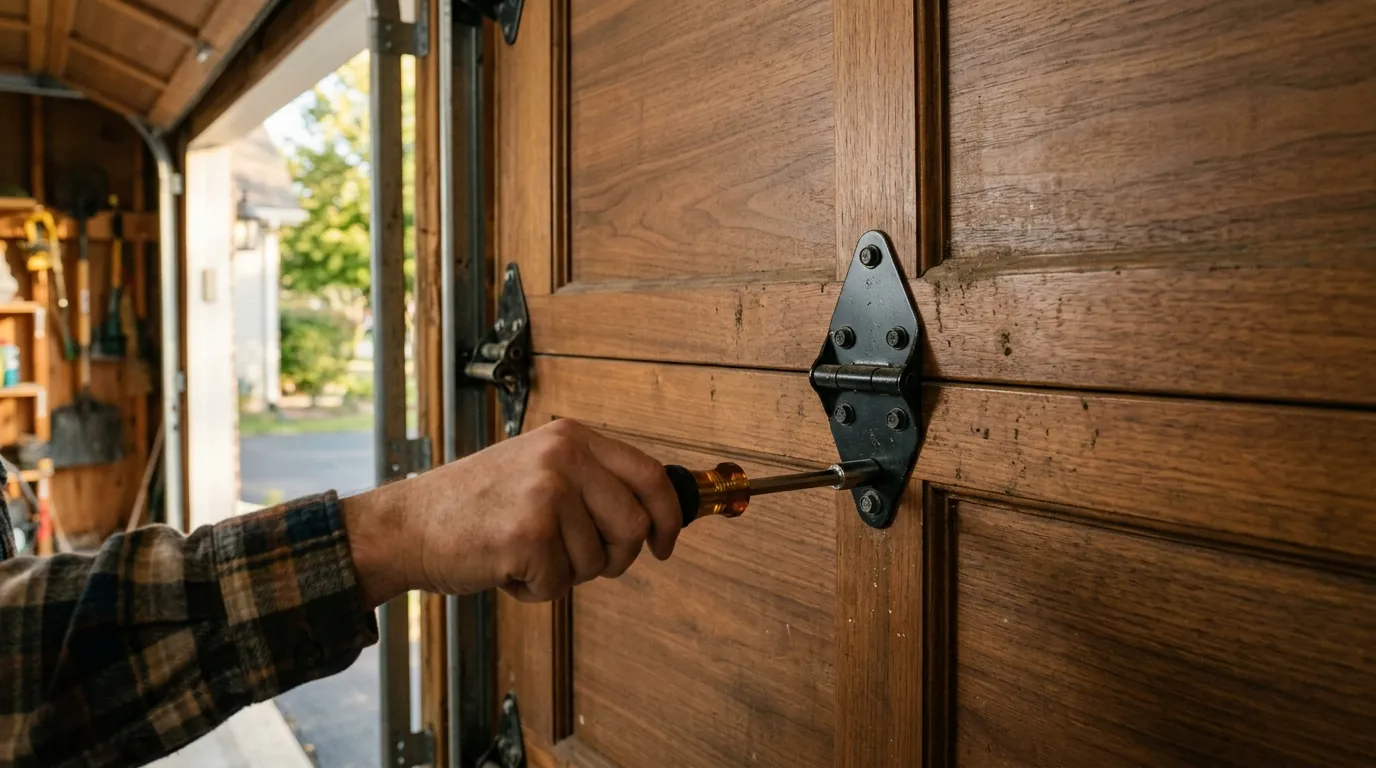
Hinge and bracket screws work loose with every cycle. A door that rattles or shakes as it moves usually has loose hardware, worn rollers wobbling in the track, or an opener chain with too much slack. Tightening the screws on the middle sections is a safe homeowner job; leave the bottom brackets alone, because they hold cable tension.
The bang: when to stop
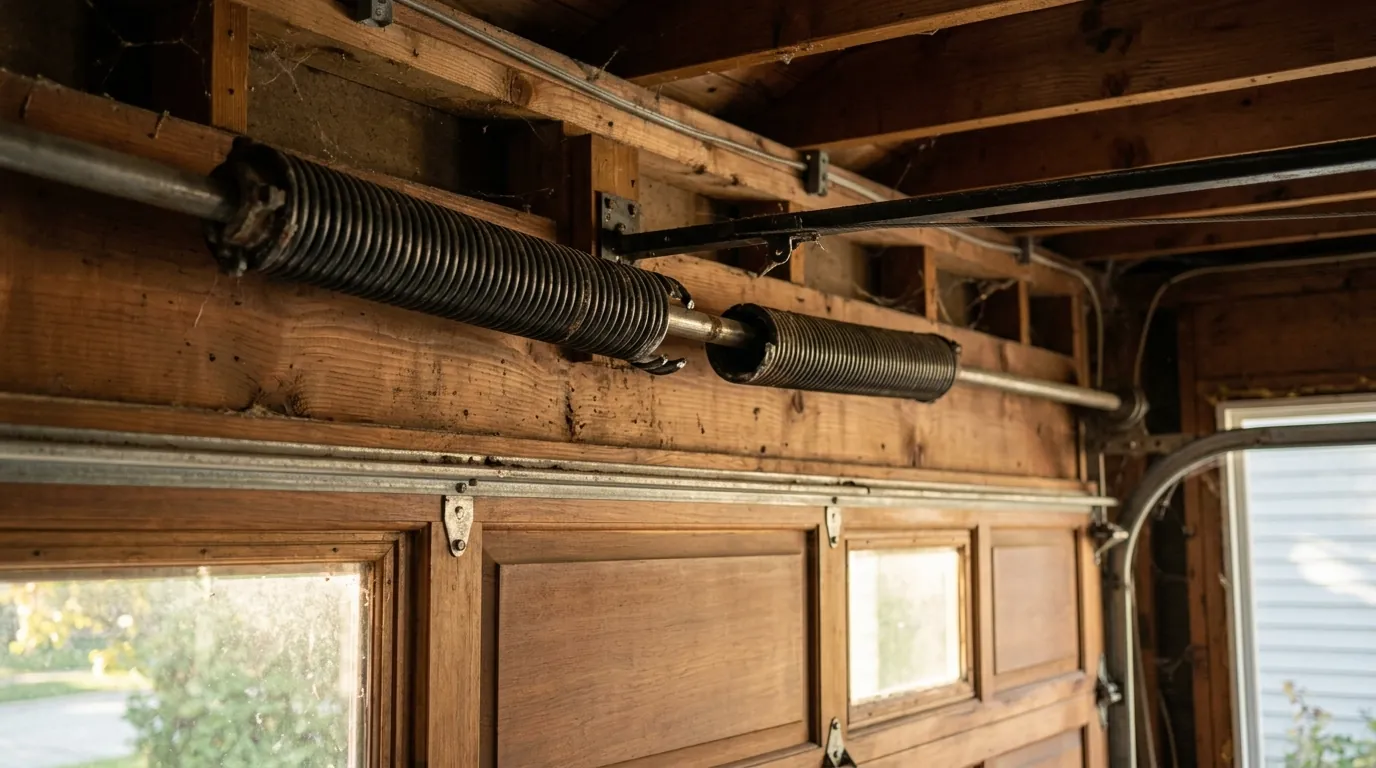
A single loud bang from the garage, often heard from inside the house, with the door closed and quiet afterward, is the classic sign of a broken torsion spring. The door will be too heavy to open, and the opener may strain or lift it a few inches and stop. Leave the door closed, unplug the opener and call. Torsion spring replacement explains the repair.
When to call instead
If you heard a bang, see a gap in a spring, or a cable is hanging loose, stop using the door. Those are failures under load, and we answer 24/7.
Related: Garage Door Roller & Hinge Replacement, Torsion Spring Replacement, Garage Door Opener Repair.