Short answer
Road salt rusts garage doors from the bottom up: salty slush tracked in on cars and shoveled against the door sits on the bottom section and seal all winter. Rinse the bottom of the door and the slab during thaws, touch up chips in the paint each spring, and replace a split bottom seal before slush gets behind it.
Why the bottom section rusts first
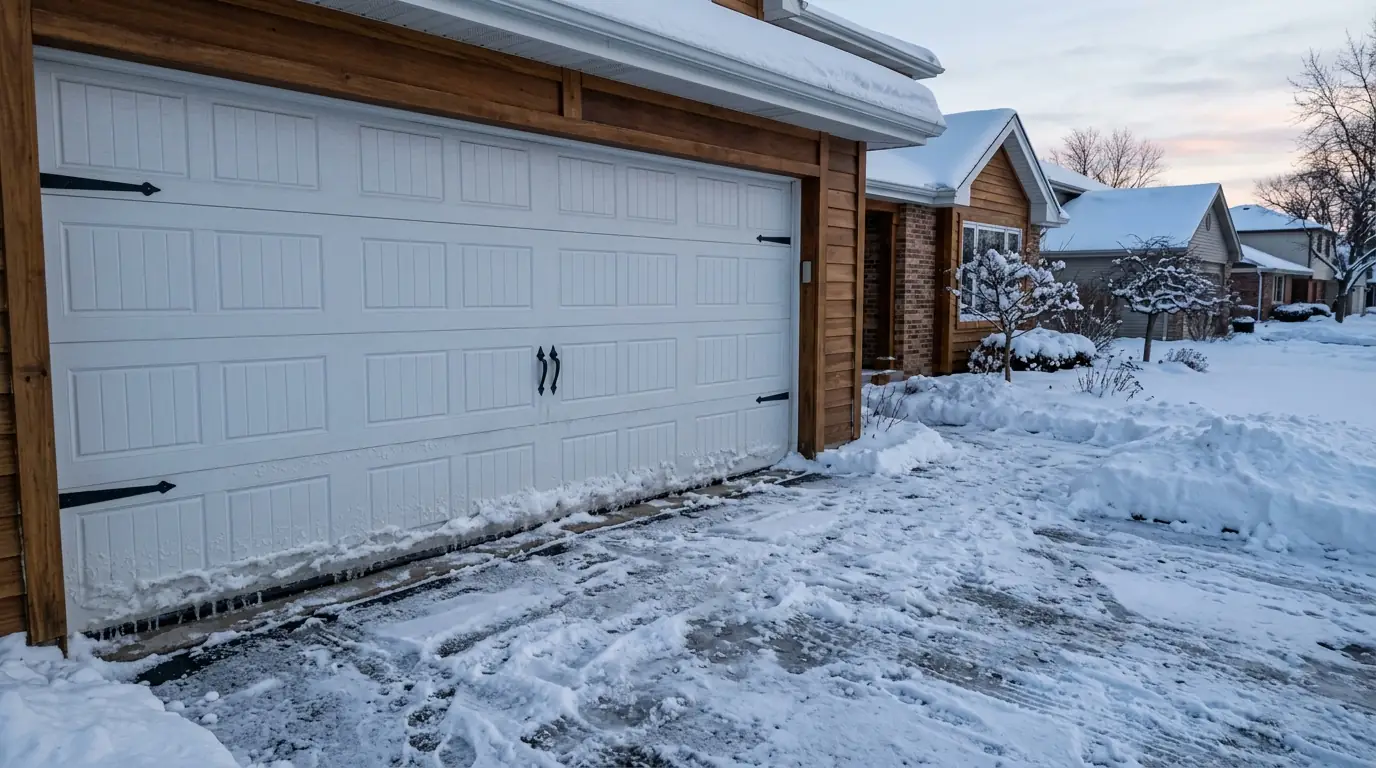
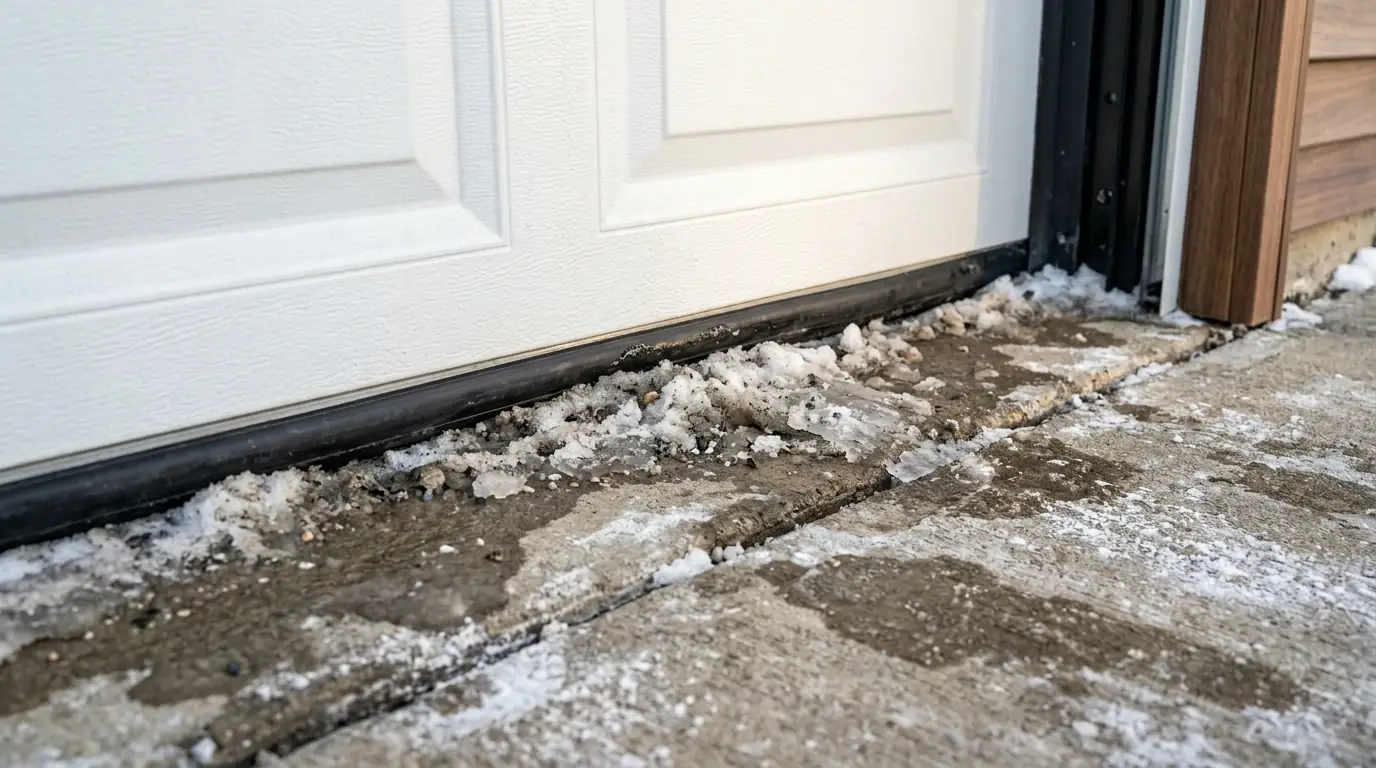
Naperville averages about 30 inches of snow a year, and the roads are salted through the season. Cars carry salty slush into the garage, and shoveling pushes more of it against the outside of the door. The bottom section, its seal retainer and the brackets at each corner sit in that mix for months.
Salt water speeds up rust wherever the paint is chipped, and the bottom edge takes the most knocks. Once rust starts under the finish, it spreads behind the paint where you cannot see it until it bubbles.
Where to look
- The bottom edge of the door, especially the corners
- The seal retainer along the bottom, if it is steel
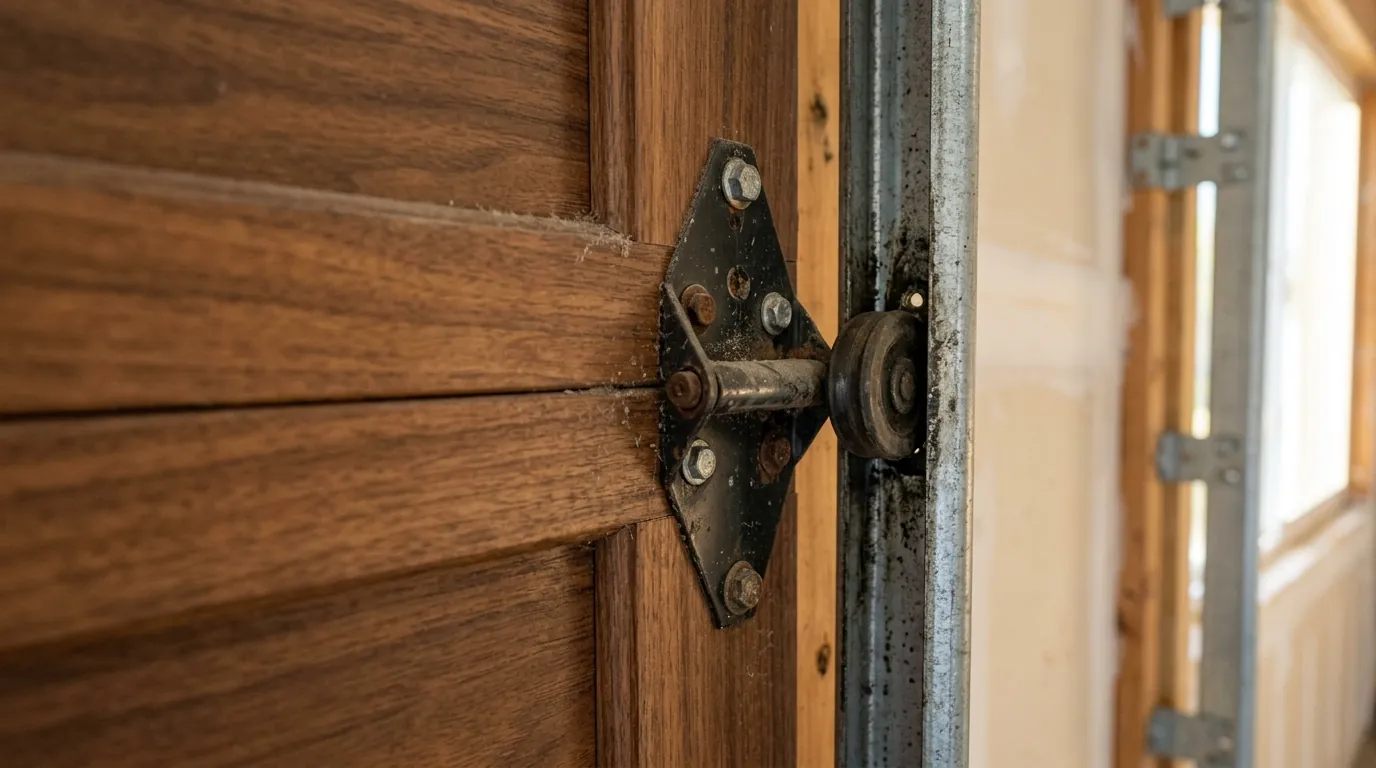
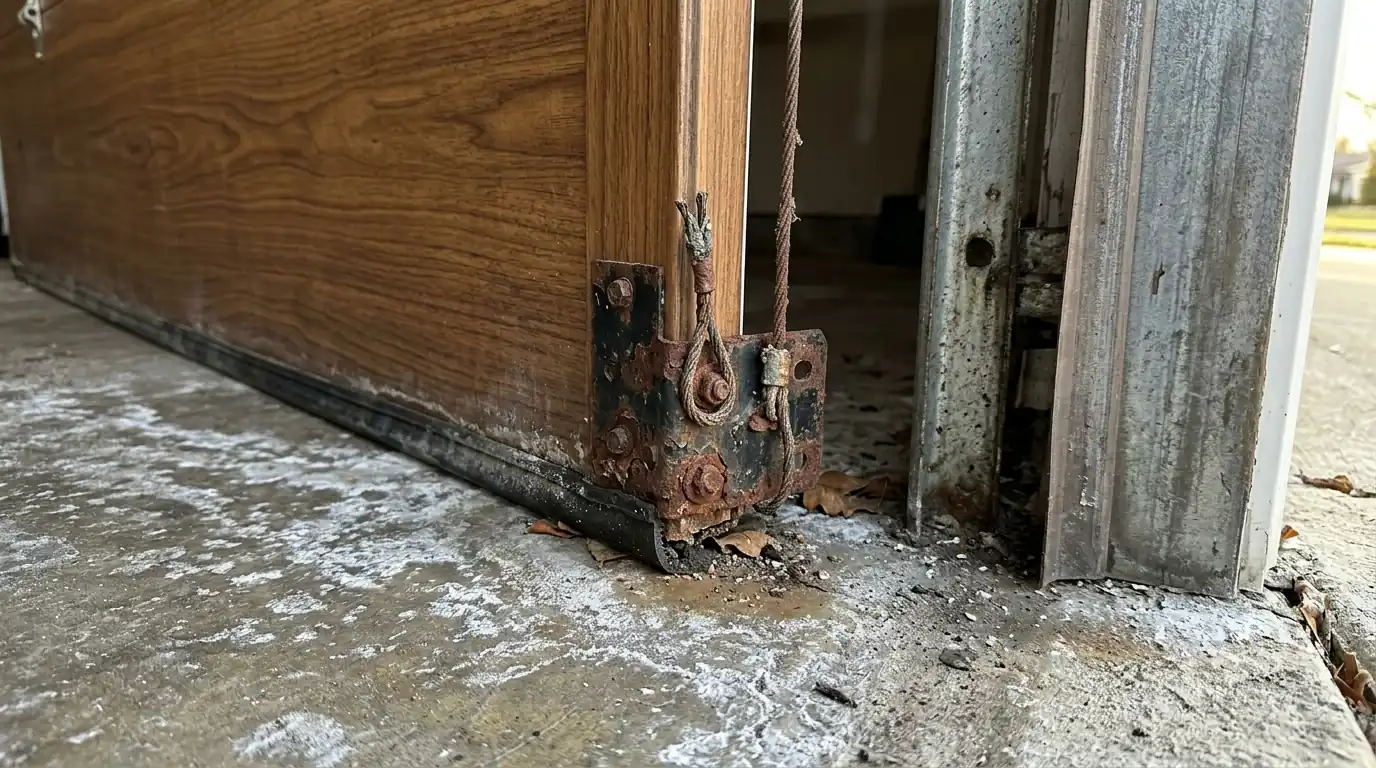
- The bottom brackets, where the lift cables attach
- The base of each vertical track
- The lift cables near the bottom brackets, for rust or broken strands
A simple winter routine
- During a thaw, rinse the bottom of the door and the slab under it with plain water
- Push slush away from the door instead of against it when you shovel
- Let the floor dry before closing the door on a wet seal
- Check the bottom seal for splits; slush behind a torn seal sits on the steel
- Keep a mat or tray under the car to catch the worst of the slush
Spring touch-up
Once the salt season is over, wash the bottom section with mild soap and water, rinse it and let it dry. Lightly sand any rust spots back to clean metal, prime them, and paint with a finish suited to the door, following the door maker's instructions. Small spots caught early stop there.
While you are there, look at the bottom seal. A flattened or split seal lets water sit on the steel all year; replacing it is a small job that protects the door.
When rust is past touching up
Rust that has eaten through the steel cannot be painted away. If it is confined to the bottom section and a matching section is still made, replacing that section is the repair; Angi puts panel replacement at about $250 to $1,000. If several sections are affected, a new door is usually the better spend.
Rusted bottom brackets are a different matter. They hold cable tension, and a bracket that has rusted thin can fail. Have it replaced by a technician, never by loosening it yourself.
Doors that shrug off salt
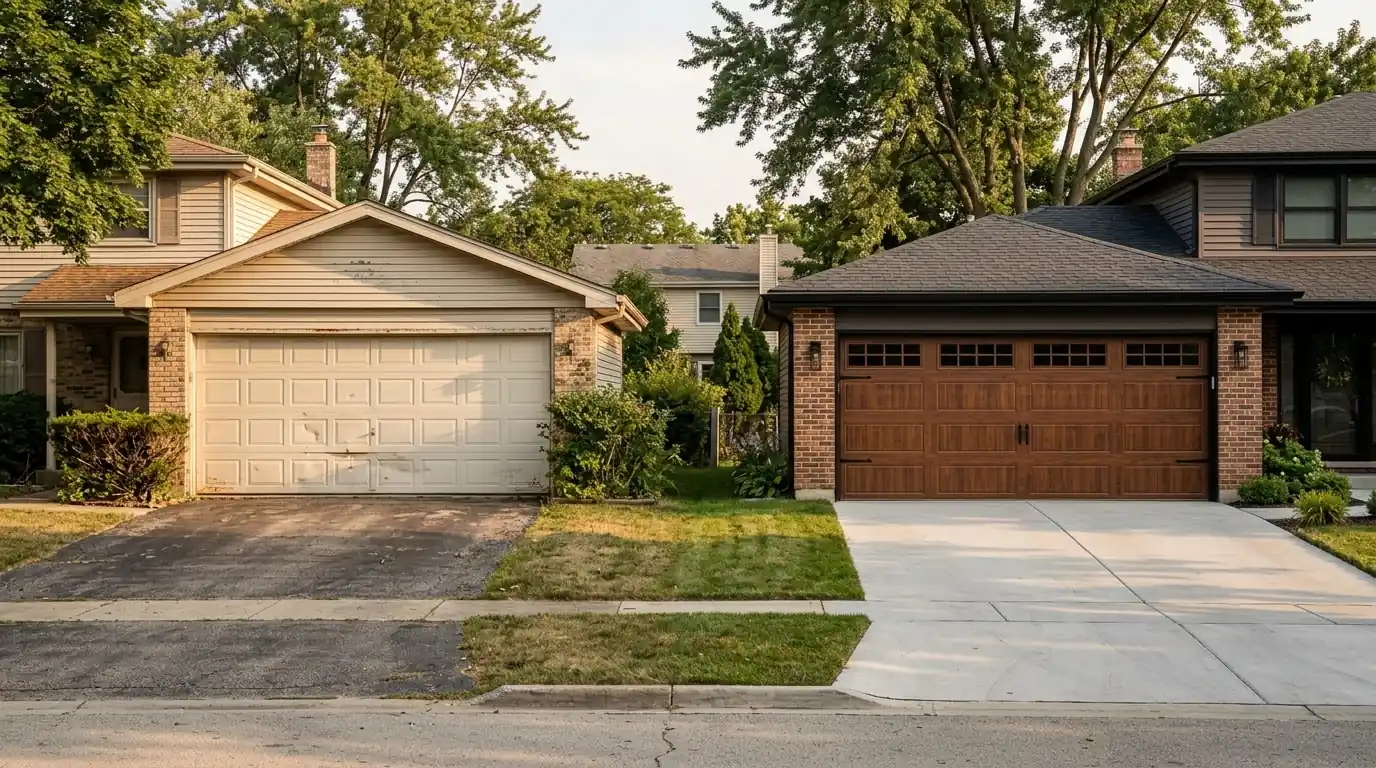
When it is time for a new door, look at the finish as much as the material. Galvanized steel with a good factory paint system, aluminum frames and composite overlays all hold up better to salt than bare or thin coatings, and a door that seals tightly keeps slush out of the garage in the first place.
When to call instead
If the bottom brackets are rusted or the cables beside them are fraying, do not loosen anything. Those parts are under spring tension; call and we will replace them safely.
Related: Garage Door Panel Replacement, Garage Door Cable Replacement, Garage Door Weatherstripping.