Short answer
If your garage door will not open on a cold morning, check for a bottom seal frozen to the floor, a spring that broke overnight, photo eyes blocked by snow or salt, or an opener that cannot overcome a stiff door. Do not keep pressing the button: running the opener against a frozen or broken door can strip its gear or tear the seal.
First check: is the door frozen to the floor?
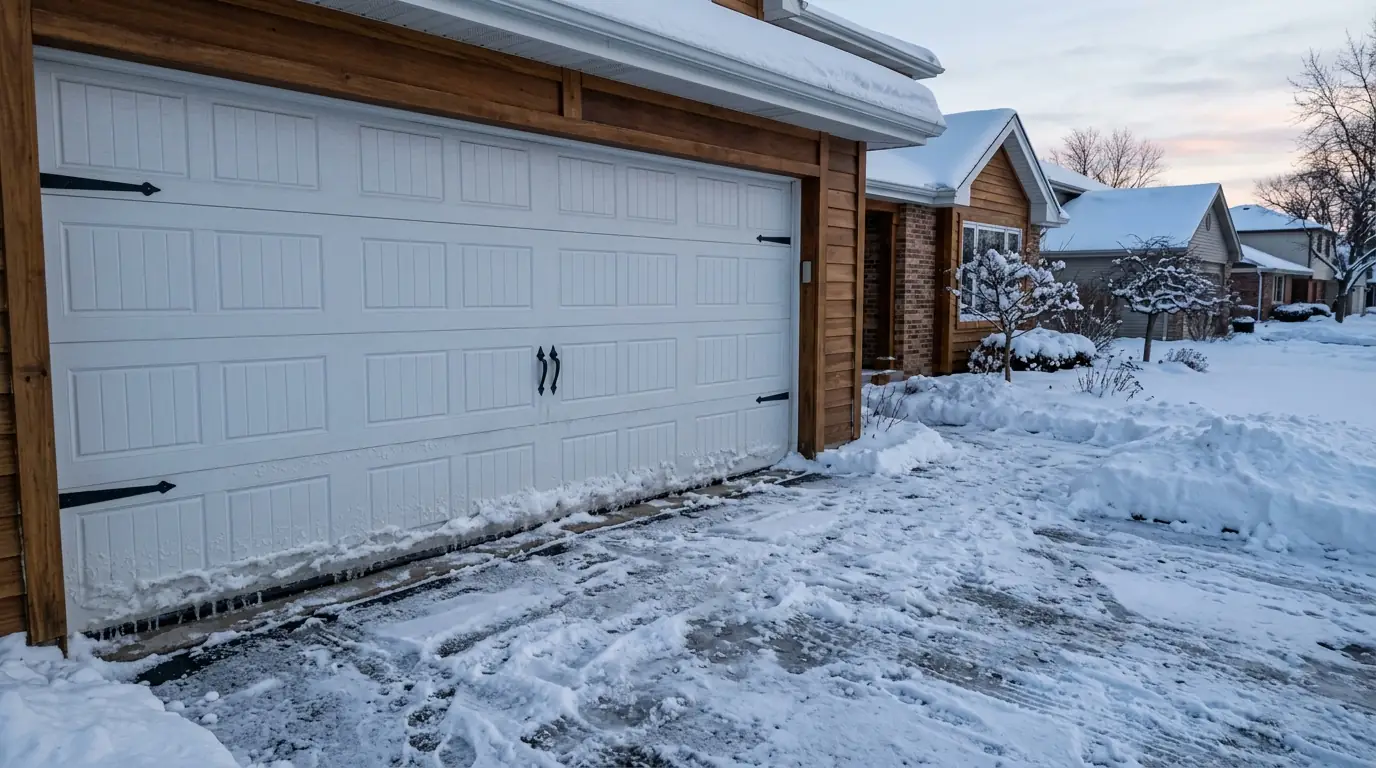
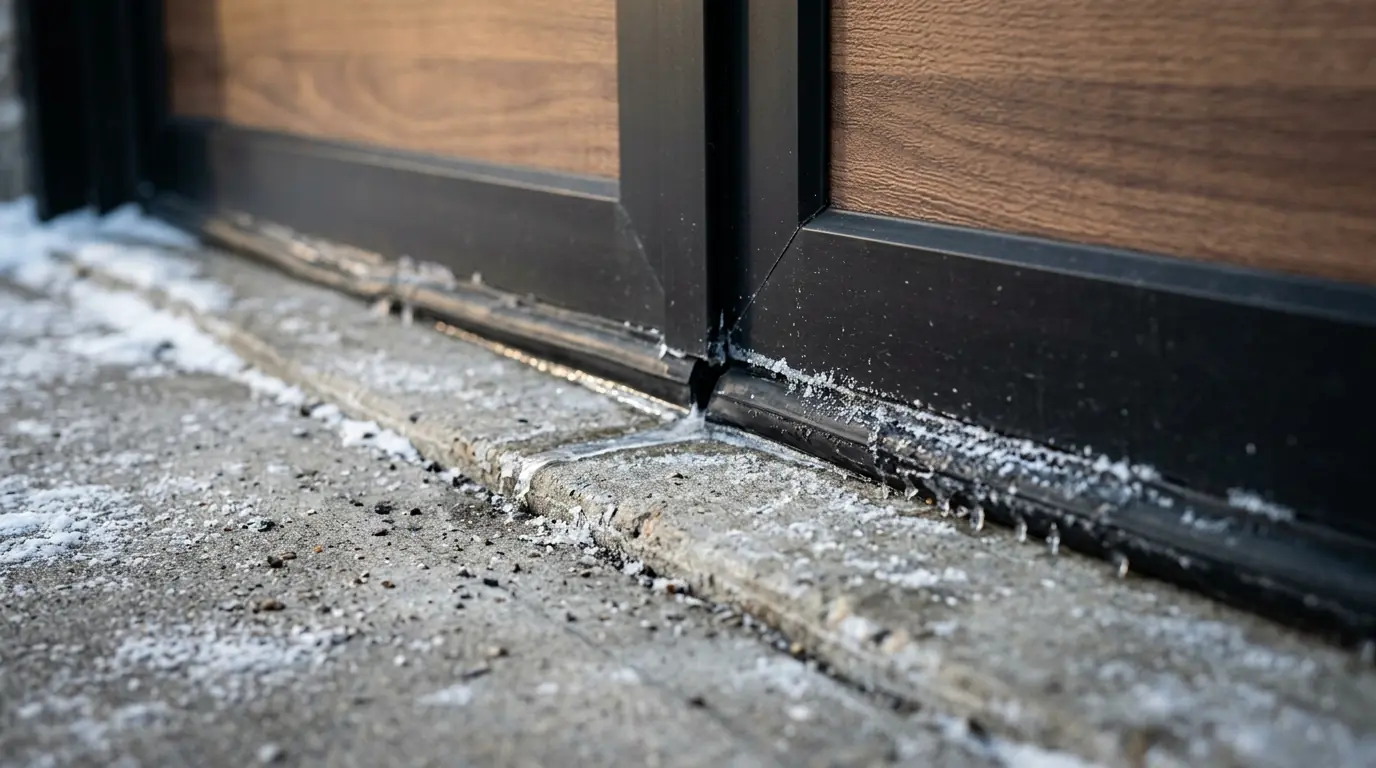
Snowmelt and slush run under the bottom seal during the day and freeze overnight. The door is then glued to the slab, and the opener either hums, starts and stops, or lifts the top of the door while the bottom stays put. Press the button once, watch, and stop if the door does not move.
To free it, work along the seal with a plastic scraper or a hair dryer on low, keeping clear of the door's path. Avoid metal tools near the rubber, and skip hot water, which refreezes. Once it is free, clear the slab under the seal and spray the rubber with silicone so it does not stick again.
Second check: did a spring break overnight?
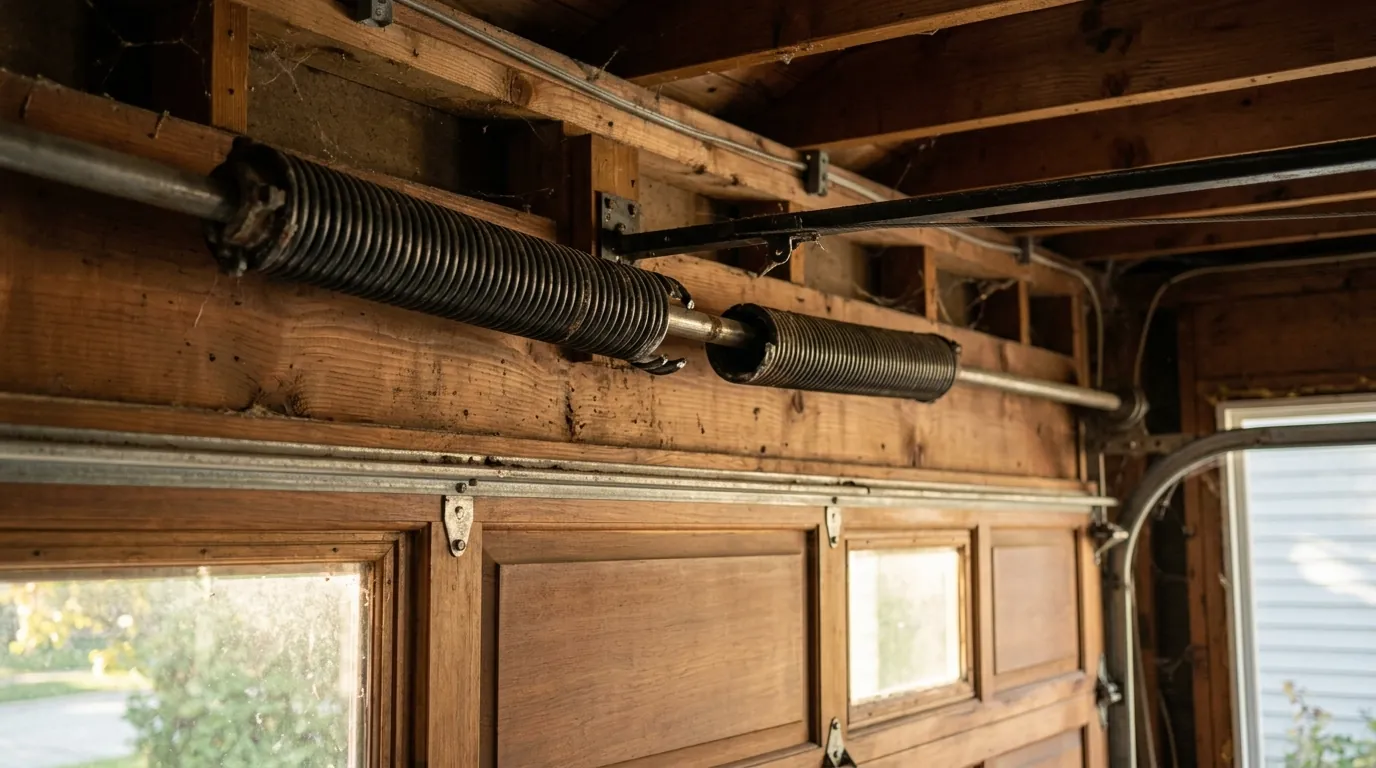
Look at the springs above the door. A broken torsion spring shows a clear gap in the coil, and many people heard a loud bang in the night or early morning. With a broken spring, the door is far too heavy to open by opener or by hand, and the opener may strain or the door may rise a few inches and stop.
This is the real emergency. Leave the door closed, unplug the opener, and call. Do not pull the red emergency release on an open door with a broken spring, because the door can fall. Emergency garage door repair covers what happens next.
Third check: snow or salt on the photo eyes
Naperville averages about 30 inches of snow a year, much of it shoveled or tracked to the edge of the garage, right where the photo eyes sit a few inches above the floor. A ridge of slush or a salt crust on a lens breaks the beam, and the door reverses or refuses to close, often with the opener light blinking.
Clear the snow from the opening, wipe both lenses with a soft dry cloth, and check that the small lights on both sensors are steady. If one stays off, the eyes may have been knocked out of line; see sensor repair.
Fourth check: the opener itself
Cold makes everything stiffer, from the lubricant on the rollers to the door itself. An opener whose force setting is barely enough in summer may stop short in winter. Remote and keypad batteries also weaken in the cold, so if the wall button works and the remote does not, start with new batteries.
Turning up the opener's force to push through is not the fix. The force setting is part of the safety system, and a door that needs more force usually needs a balance check or lubrication instead.
What not to do in the cold
- Keep pressing the button while the door does not move
- Pull the emergency release on an open door with a broken spring
- Chip at a frozen seal with a shovel or ice pick
- Pour hot water along the door, which refreezes in minutes
- Turn up the opener's force to overpower a stuck door
Getting ahead of the next cold snap
In deep cold snaps like January 2014, when Naperville's lows averaged about 6F, every weak point shows up at once. A fall tune-up catches tired springs and frayed cables before then, resets the opener for the door's real weight, and leaves the seal sprayed and supple. A garage door tune-up covers all of it in one visit.
When to call instead
If you see a gap in a spring, a cable hanging loose, or the door hanging crooked, stop and call. Those are not cold-weather quirks; they are failures, and we answer 24/7.
Related: Emergency Garage Door Repair, Torsion Spring Replacement, Garage Door Sensor Repair.