Short answer
Choose a belt drive opener if the garage is attached or under a bedroom, because it is the quietest; a chain drive if noise matters less than budget; and a wall-mount jackshaft opener if you want the ceiling clear and the door has torsion springs. HomeGuide puts a new opener installed at about $300 to $900.
The three drive types in one table
| Belt drive | Chain drive | Wall-mount jackshaft | |
|---|---|---|---|
| Noise | Quietest | Loudest | Quiet in nearby rooms |
| Mounts | Ceiling rail | Ceiling rail | Wall beside the door |
| Garage needs | Ceiling outlet, rail space | Ceiling outlet, rail space | Torsion springs, outlet by the shaft |
| Best for | Attached garages | Detached garages, budgets | High ceilings, lifts, storage |
Belt drive: the quiet one
A reinforced rubber belt replaces the chain, so the trolley glides instead of rattling. Paired with a DC motor that starts and stops softly, it is the opener least likely to be heard in the rooms around the garage. For most attached garages, it is the default recommendation.
Chain drive: the workhorse
Chain drives are durable, strong and lower in cost. They are louder, which matters less in a detached garage or one away from living space. Modern chain drives with DC motors are much quieter than the openers many houses came with.
Wall-mount jackshaft: the clear ceiling
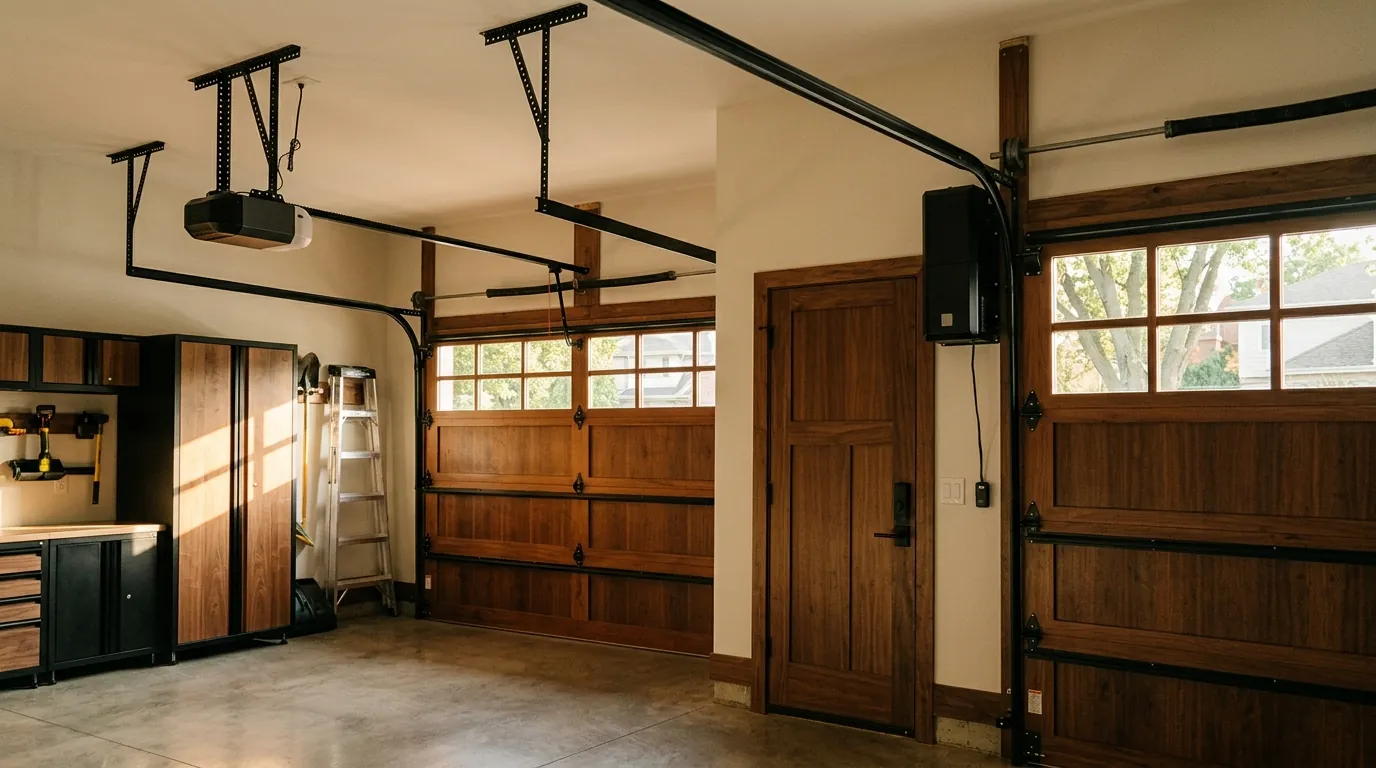
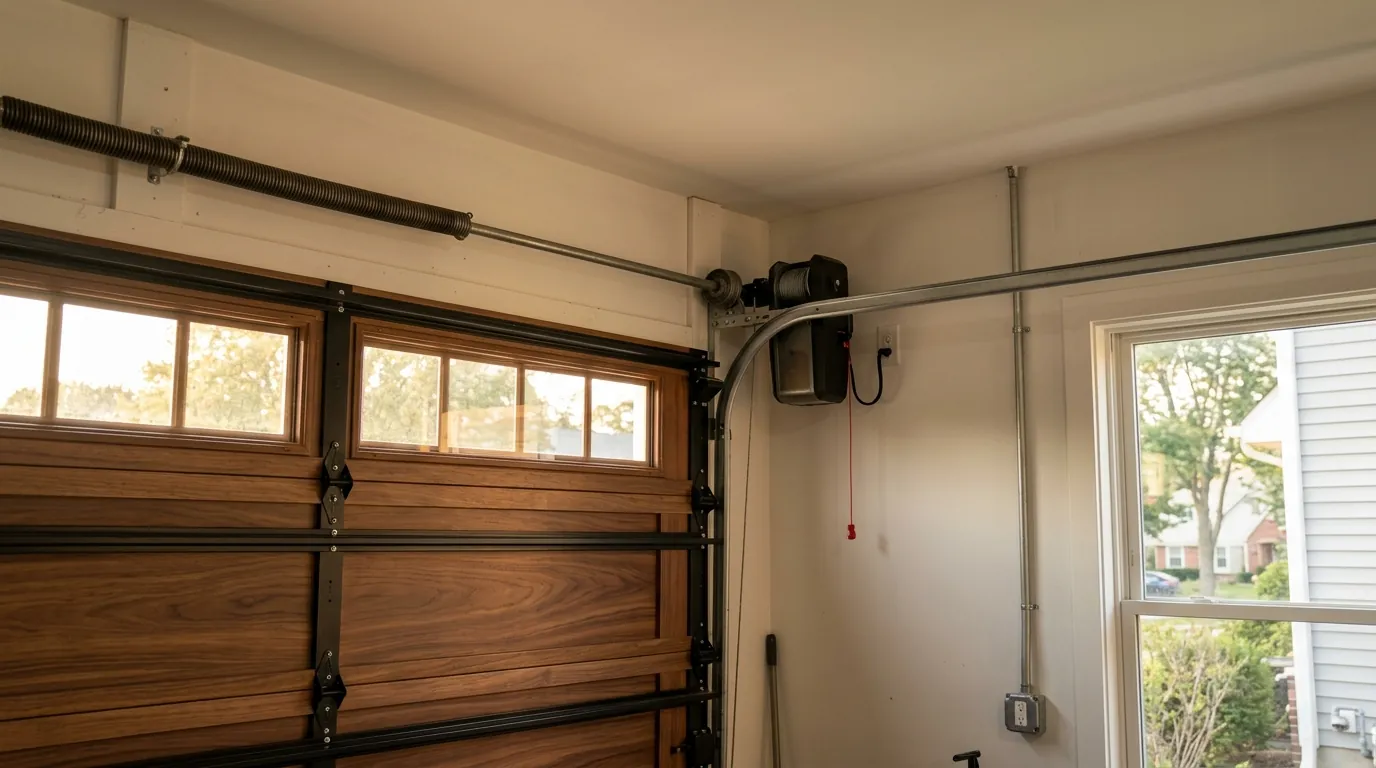
A jackshaft opener mounts beside the door and turns the torsion bar directly, so nothing hangs from the ceiling. That makes it the usual choice for high-lift tracks, tall ceilings, car lifts and overhead storage. It needs a torsion spring system and an outlet near the end of the shaft; doors with side springs need a torsion conversion first.
Features worth paying for
- Rolling-code remotes, which cannot be copied by recording the signal
- A DC motor with soft start and stop, which is quieter and easier on the door
- Battery backup, if the garage is your main way in and out
- Wi-Fi control, to check or close the door from your phone
- Built-in LED lighting, bright enough to replace a ceiling bulb
Before you buy: test the door
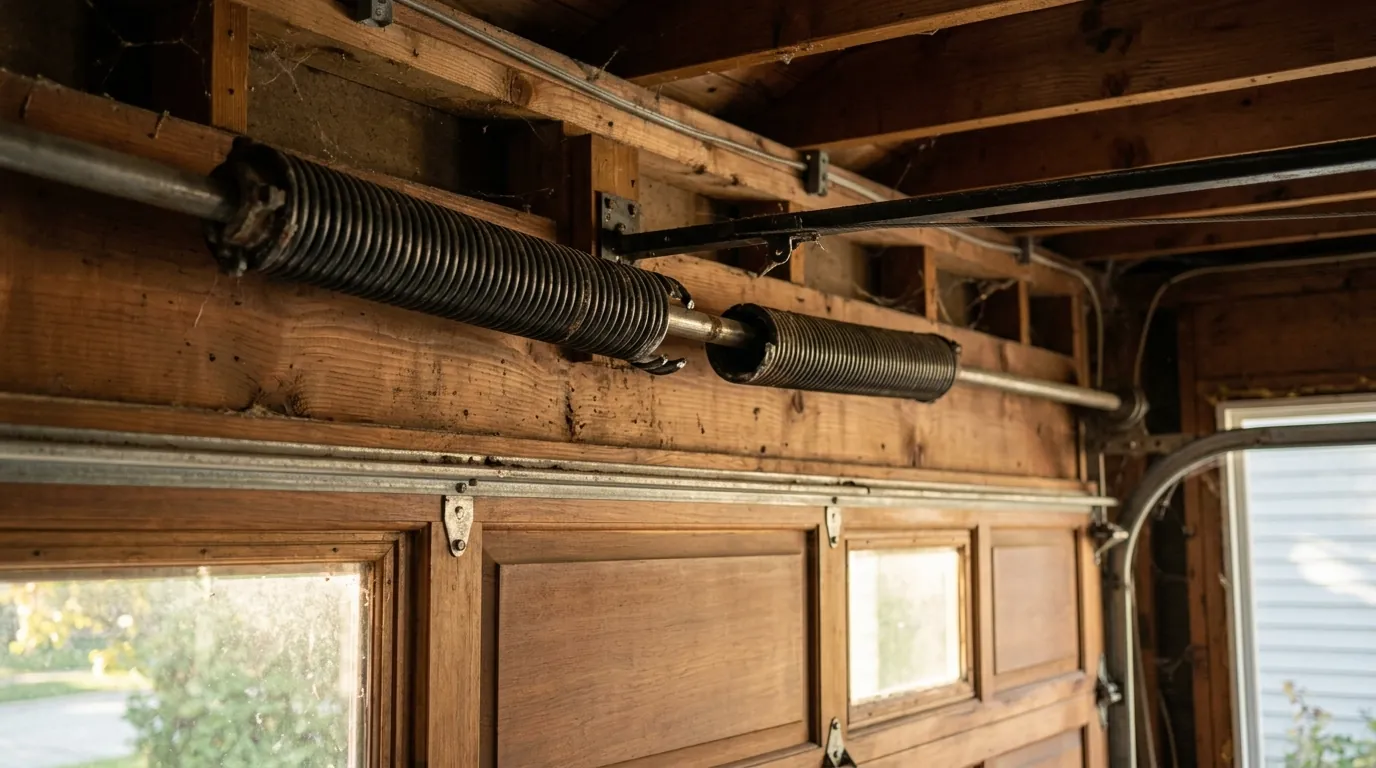
The opener guides the door; the springs carry its weight. Disconnect the opener and lift the door halfway. If it stays put, it is balanced. If it drops or climbs, the springs need attention first, or the new opener will strain and wear out early. Opener installation always starts with that test.
When to call instead
Openers are sold for DIY install, but setting close force, aligning the photo eyes and reinforcing the top section are where installs go wrong. If you want it done once, call.
Related: Garage Door Opener Installation, Jackshaft Opener Installation, Smart Garage Door Opener Installation.